Adelson e Salvini. Adelson e Salvini is one of those opera titles that even many Bellini lovers discover late or not at all; understandable, because it is an opera that balances between “promising” and “unfinished.”
Read More →

Adelson e Salvini. Adelson e Salvini is one of those opera titles that even many Bellini lovers discover late or not at all; understandable, because it is an opera that balances between “promising” and “unfinished.”
Read More →
Adelson e Salvini. Adelson e Salvini is een van die operatitels die zelfs veel Bellini-liefhebbers pas laat of helemaal niet ontdekken; begrijpelijk want het is een opera die balanceert tussen “veelbelovend” en “onaf”.
Read More →
The Secret Opera Lover. He nods approvingly when the terms “deconstruction,” “reinterpretation” and “actualization” are mentioned. And when wine is drunk in the foyer afterwards, he always has a phrase ready that anchors him safely in the troupe: “This is 2025, not 1850.” But deep inside – beneath the layer of socially desirable modernity – lurks a carefully kept secret. Homesickness. A gentle but insistent longing for something that is considered highly suspect in opera circles of contemporary people: opera that is true to the libretto and the episode.
Read More →
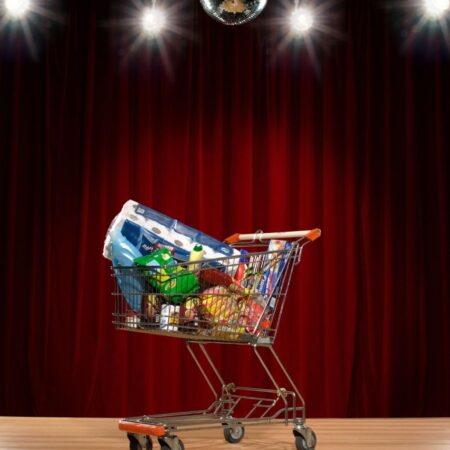
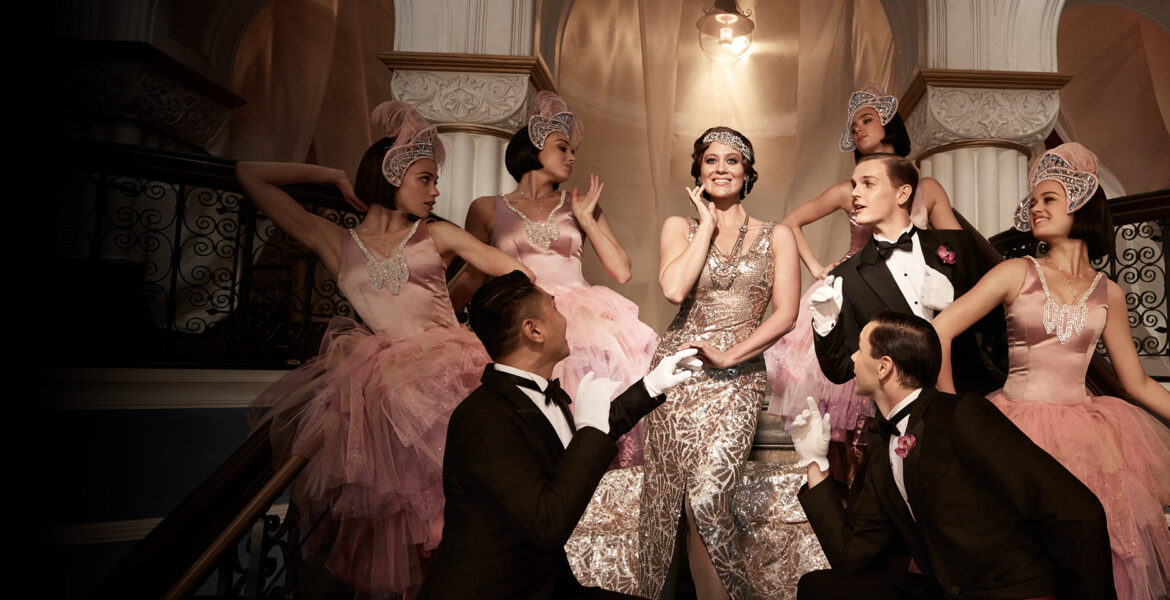
Madama Butterfly in Sydney. Oxenbould’s stylish single-set production is a reliable workhorse with no surprises, pulling all the right strings and ticking all the right boxes. Its balletic, “movement”-heavy approach to blocking frequently smacks of filling the moment for the sake of it, but if its ubiquity in the company’s rotation is anything to go by, such easily repeatable elements can compensate for a dramatic cohesion that often goes by the wayside when time (a.k.a.: money) and box office are of the essence.
Read More →
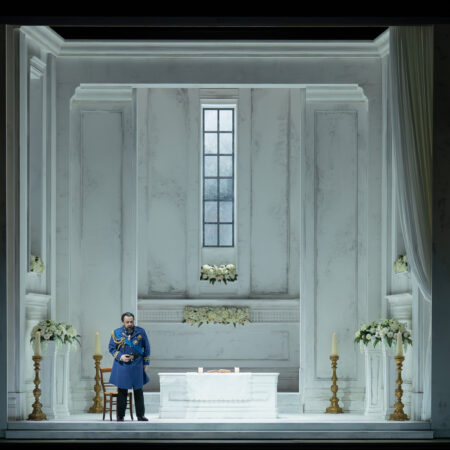
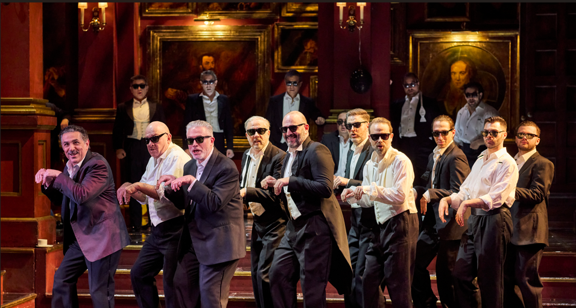
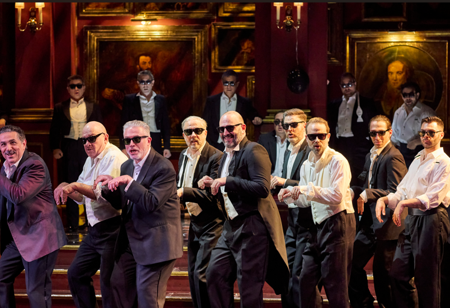
The secret opera connoisseur. Das Syndikat sagt NEIN! ( The Syndicate says NO! )
Read More →
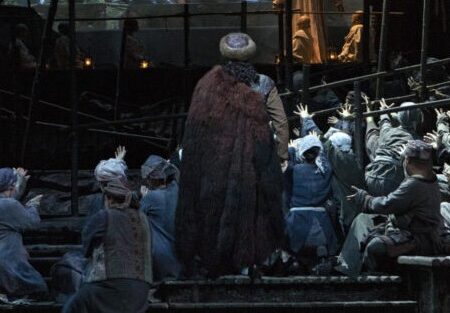
De geheime operakenner. Das Syndikat sagt NEIN!
Read More →
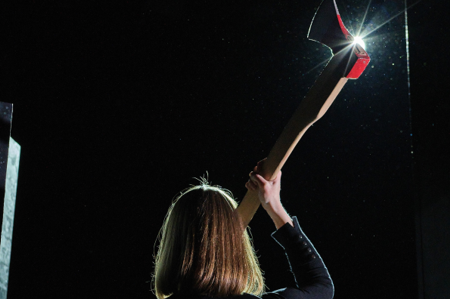
Violetta. Dat ze er ondertussen bloed bij ophoest, is een psychosomatische vooruitwijzing naar de Eerste Wereldoorlog. Haar echte betekenis ligt in haar indrukwekkende vermogen om het repugnante demasqué der onwaarachtigheid op esthetische, quasi-esthetische wijze zo u wilt, te presenteren.
Read More →

Norma. Bellini\\\’s Norma is rather ambiguous in musical terms. On paper, the orchestra often seems sober and \\\’standard\\\’ bel canto, but in an excellent performance, the work can be mesmerising. Norma is entirely dependent on top-quality vocals. Bellini writes long phrases that offer little \\\’foothold\\\’ to singers who do not have exceptional legato. \\\’Casta diva\\\’ unfolds deliberately simply and slowly, but with too broad a vibrato, the aria becomes a series of loose, beautiful notes. This applies equally to the following cabaletta \\\’Ah! bello a me ritorna\\\’: if the tempo is too mechanical, virtuosity turns into routine and the music only sounds accelerating \\\’because that\\\’s how it\\\’s supposed to be\\\’.
Read More →

Norma. Bellini’s Norma is in muzikaal opzicht nogal tweeslachtig. Op papier lijkt het orkest vaak sober en “standaard” belcanto, maar in een voortreffelijke uitvoering kan het werk hypnotiserend werken. Norma is volledig afhankelijk van vocale topkwaliteit. Bellini schrijft lange bogen die nauwelijks “houvast” bieden aan zangers die niet over een uitzonderlijk legato beschikken. “Casta diva” vouwt zich doelbewust eenvoudig en langzaam uit, maar met een te breed vibrato wordt de aria een reeks losse mooie noten. Dat geldt evenzeer voor de erop volgende cabaletta “Ah! bello a me ritorna”: als het tempo te mechanisch is, verandert virtuositeit in routine en klinkt de muziek alleen versnellend “omdat het u eenmaal zo hoort”.
Read More →

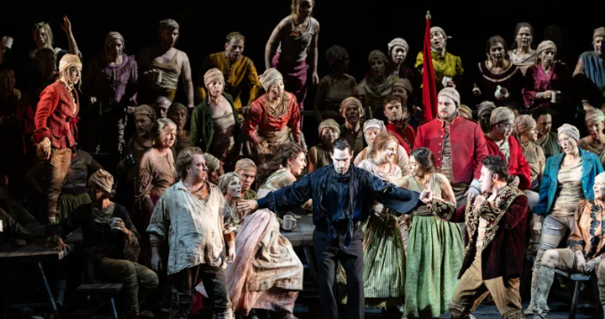
Lady Macbeth del distretto di Mcensk. As for the soloists, Sara Jakubiak is a deeply moving Katerina in her vocal and physical performance. Najmiddin Mavlyanov plays a seductive Sergei, indifferent to what he provokes and inexorably sets in motion. Alexander Roslavets imposes a brutal, primitive, and disturbing Boris. Around them, remarkably, each role is played with rare intensity.
Read More →
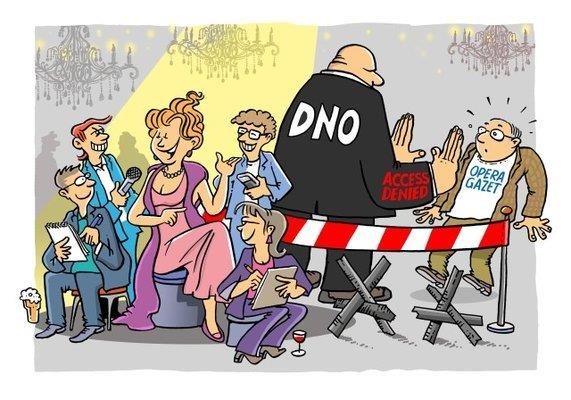
I Capuleti e i Montecchi. Yaritza Véliz was a revelation for us in the role of Julia. Brilliant, beautiful, and magnificent. This Chilean soprano possesses all the vocal assets and technical skills required for bel canto: purity of tone, excellent breath control and a feel for melodic lines, clarity and precision in the vocalises, a comfortable range and, above all, a flexibility that enables her to convey emotions simply by varying her tone, dynamics or use of voice, with floating, ethereal high notes worthy of the greatest singers.
Read More →

I Capuleti e i Montecchi. Yaritza Véliz was voor ons een openbaring in de rol van Julia. Schitterend, mooi en prachtig. Deze Chileense sopraan beschikt namelijk over alle vocale troeven en technische bagage die nodig zijn voor belcanto: zuiverheid van klankkleur, uitmuntende ademcontrole en gevoel voor melodielijnen, helderheid en precisie in de vocalises, een comfortabel bereik en vooral een flexibiliteit die haar in staat stelt emoties over te brengen door alleen maar te variëren in klankkleur, dynamiek of stemgebruik, met zwevende, etherische hoge tonen die de grootste zangers waardig zijn.
Read More →

Die Fledermaus. The audience responded with consistent enthusiasm, even if a full standing ovation did not materialize. Musically and theatrically – especially in the direction of the principals and the choreography (direction: Anna Bernreitner, dramaturgy: Jana Beckmann) – the work was of an extremely high standard. One had the impression of extremely thorough rehearsal, which had brought great enjoyment to all involved, and of an authentic creative flow that never felt forced. The isolated boos for Patti Basler and the production team at the curtain call were, to us, incomprehensible.
Read More →
NOTE POCO NOTE 10. William (1092 – 1983). Musicista inglese, autore di molta musica per film ma anche di due sinfonie e un’opera. Le sue marce rivaleggiano con le analoghe di Elgar. L’unica opera realizzata da Walton, Troilo e Cressida, risale al 1954 ma venne in seguito soggetta a profonda revisione e a numerosi tagli.
Read More →

NOTE POCO NOTE 9. SCHMIDT Franz (1874 – 1939). Compositore austro-ungarico, inspiegabilmente ignorato dalla critica e molto raramente presente in una programmazione concertistica.ROUSSEL, Albert (1869 – 1937). Compositore francese dallo stile molto personale, poco valorizzato sia in termini di incisioni discografiche che di esecuzioni nei concerti. Ebbe tra i suoi allievi compositori come Satie e Martinu. Tra i suoi lavori sono da ricordare le quattro sinfonie e l’opera-balletto Padmâvatî, ispirato dai suoi viaggi in oriente.
Read More →
Dreigroschenoper. Het goede nieuws komt van de magnifieke cast die ervoor zorgt dat je je geen moment verveelt. Het dunkt mij recht en billijk dit compliment te herhalen, opdat onze lezers wel beseffen dat wij geenszins enig sombere pad willen betreden, maar veeleer trachten het licht van optimisme en welwillendheid te doen schijnen, immers het motto van Opera Gazet. En datzelfde compliment geldt voor het aanstekelijk puntig spelende Philzuid onder leiding van Enrico Delamboye.
Read More →

Così fan tutte at La Scala For so many reasons, especially today, it is certainly more than a curiosity to ask ourselves what Wolfgang Amadeus Mozart would have thought of this Robert Carsen staging of Così fan tutte for La Scala. It would be slightly hazardous to believe that we might sense the composer’s reasoning powers or even imagine the demands he had put upon himself while creating any of his great works.
Read More →
Don Giovanni à Toulouse. Ce Don Giovanni de bon aloi et visuellement réussi ne renouvelle pas notre connaissance de l’œuvre. L’intention est tout autre : cette production sert l’opéra de Mozart, au lieu de s’en servir à des fins nombriliques. Et elle permet de passer une matinée épanouie en une période sombre que la musique de Mozart, bien servie par une troupe jeune et homogène, une nouvelle fois réenchante.
Read More →
NOTE POCO NOTE 8. ROUSSEL, Albert (1869 – 1937). Compositore francese dallo stile molto personale, poco valorizzato sia in termini di incisioni discografiche che di esecuzioni nei concerti. Ebbe tra i suoi allievi compositori come Satie e Martinu. Tra i suoi lavori sono da ricordare le quattro sinfonie e l’opera-balletto Padmâvatî, ispirato dai suoi viaggi in oriente.
Read More →
Il Cappello di paglia di Firenze is a lyrical adaptation of Le Chapeau de paille d\’Italie, a five-act comedy by French playwright Eugène Labiche, which premiered in Paris in August 1851. The play is still regularly staged to great acclaim and is considered a classic example of a comedy full of misunderstandings and dramatic twists and turns, with a script brimming with witty repartee.
Read More →