Macbeth
Macbeth 1.03.2026 Basel (Version 5.03.2026 at 7.39)
Macbeth. A melodrama in four acts. Music by Giuseppe Verdi.
Libretto by Francesco Maria Piave and Andrea Maffei, after William Shakespeare.
Musical Director: Dirk Kaftan
Director, Set & Costumes: Herbert Fritsch
Chorus Master: Michael Clark
Macbeth: Iain MacNeil
Banquo: Marius Aron
Lady Macbeth: Heather Engebretson
Lady-in-waiting: Hope Nelson
Macduff: Rolf Romei
Malcolm: Ervin Ahmeti
Doctor: Marius Aron
Servant / Murderer / Apparition: Nathan Schludecker
King Duncan: Peter Keller
Fleance: Serafin Müller
Chorus and Extra Chorus of Theater Basel
Knabenkantorei Basel
Sinfonieorchester Basel
Music: 4****
Staging: 4****
Having recently abandoned an uninspiring “Macbeth” at Zurich Opera during the interval, we approached Basel’s new production with heightened anticipation – not least thanks to some enticing press photos. We were especially keen to see Heather Engebretson again, this time in an Italian role. Her Gutrune in Basel’s Götterdämmerung and her captivating Salome in Lucerne had already left a strong impression, and we have followed her career with great interest ever since.
Instinctive feel for timing
The musical direction under Dirk Kaftan was a particular highlight. The fruits of meticulous rehearsal were clear from the outset: Kaftan displayed a refined, almost instinctive feel for timing, accent and dramatic pacing – qualities not always guaranteed, even among celebrated conductors.
With Verdi, attention to detail is everything: the music is packed with nuance and drama, shifting moods at breakneck speed. Kaftan brought out these subtleties with real care and focus – a rare achievement, and one that served the work admirably.
The Sinfonieorchester Basel played with great musicality, forming a cohesive partnership with both conductor and singers. Their ensemble precision was striking, and the lush sound – especially from the strings and wind sections – was a real pleasure. The trombones and woodwinds deserve special mention for their immaculate tuning and blend, setting a high standard from the very first bars and maintaining it throughout the evening.
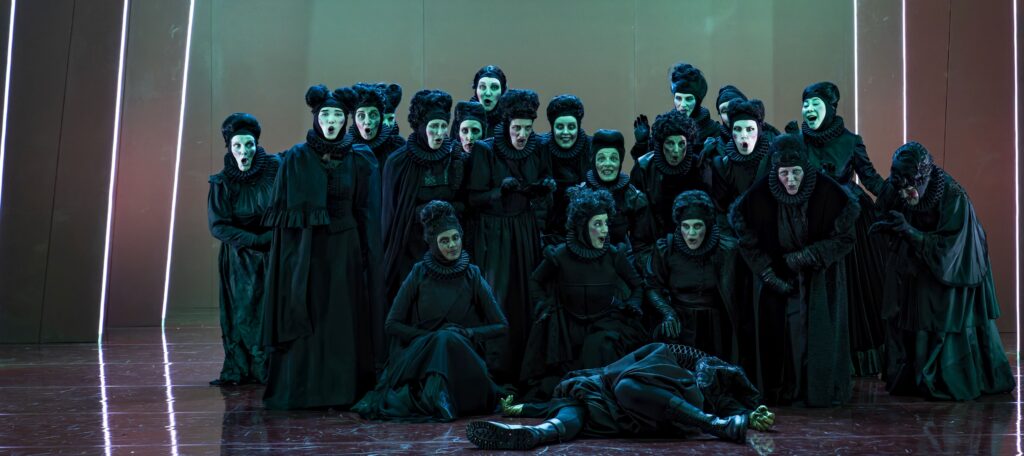
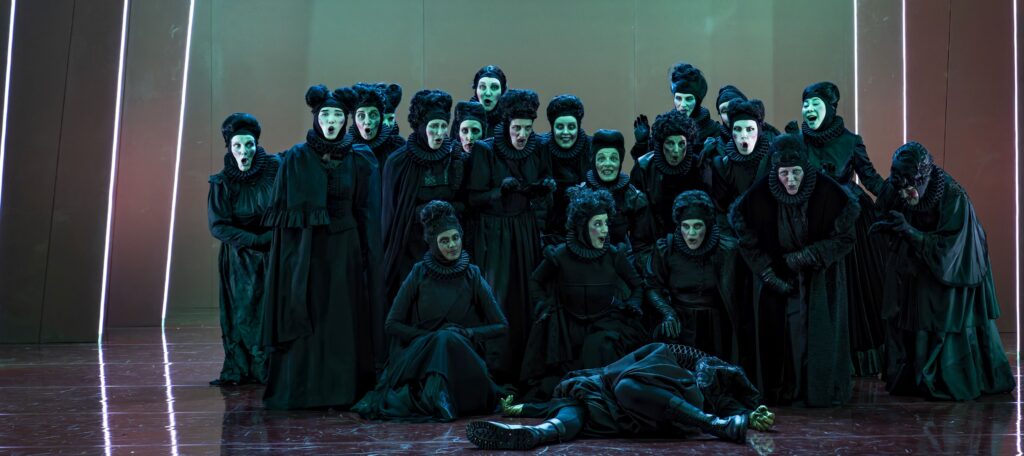
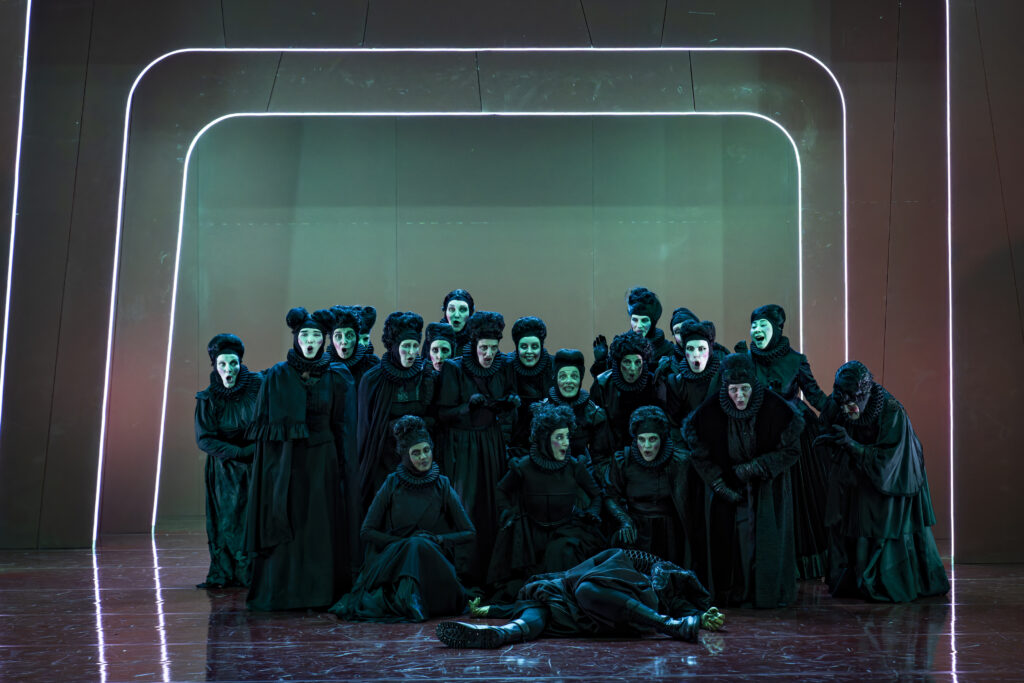
The witches’ chorus, under Michael Clark, set the tone from their first entrance: the combined forces of the Theater Basel chorus and extra chorus sang with nuance, crisp accents, and infectious energy. This high standard continued in the big choral finales of the first two acts – vibrant, full-bodied, and brimming with verve, exactly as Verdi should sound. The festive atmosphere was so infectious that, by the second interval, the audience was positively buoyant.
It was a genuine pleasure to encounter a Macbeth production that did not wallow in gloom, oppressive lighting, or apocalyptic despair – and mercifully avoided heavy-handed political messaging or clumsy psychoanalysis. Herbert Fritsch’s staging allowed the work to speak for itself, even as his own distinctive touch was evident in the direction, set and, together with Sascha-Alexander Todtner, the costumes.
Striking simplicity
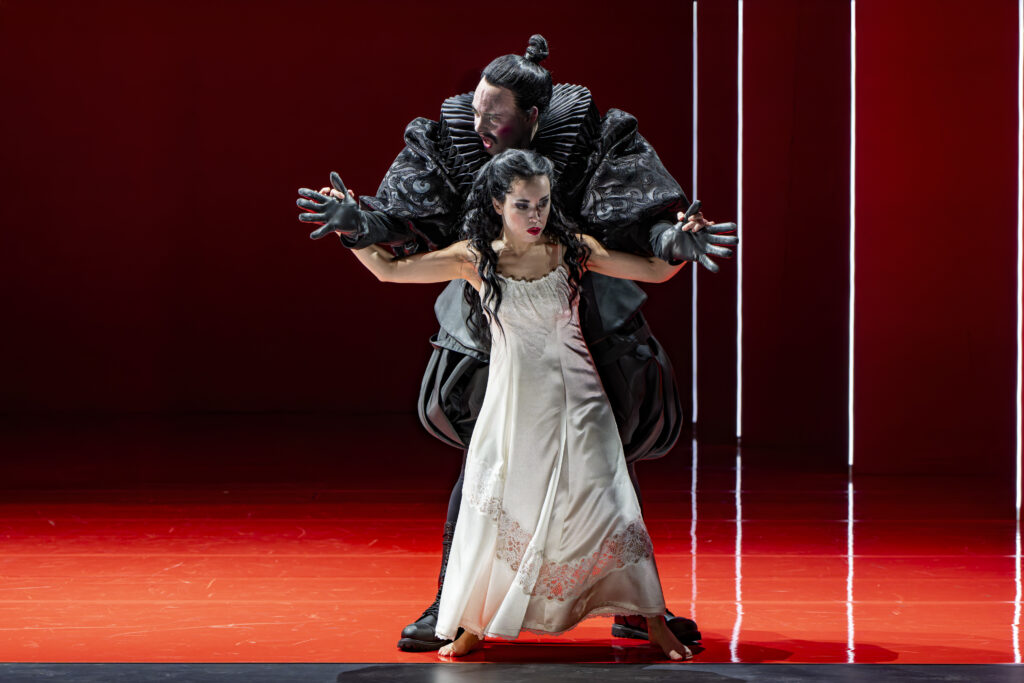
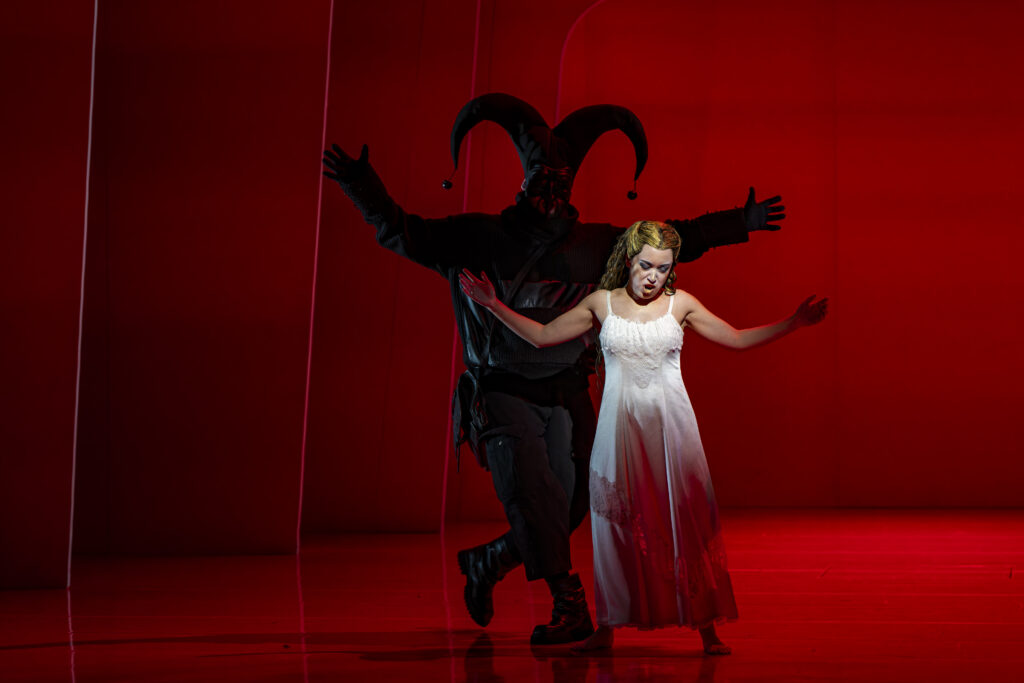
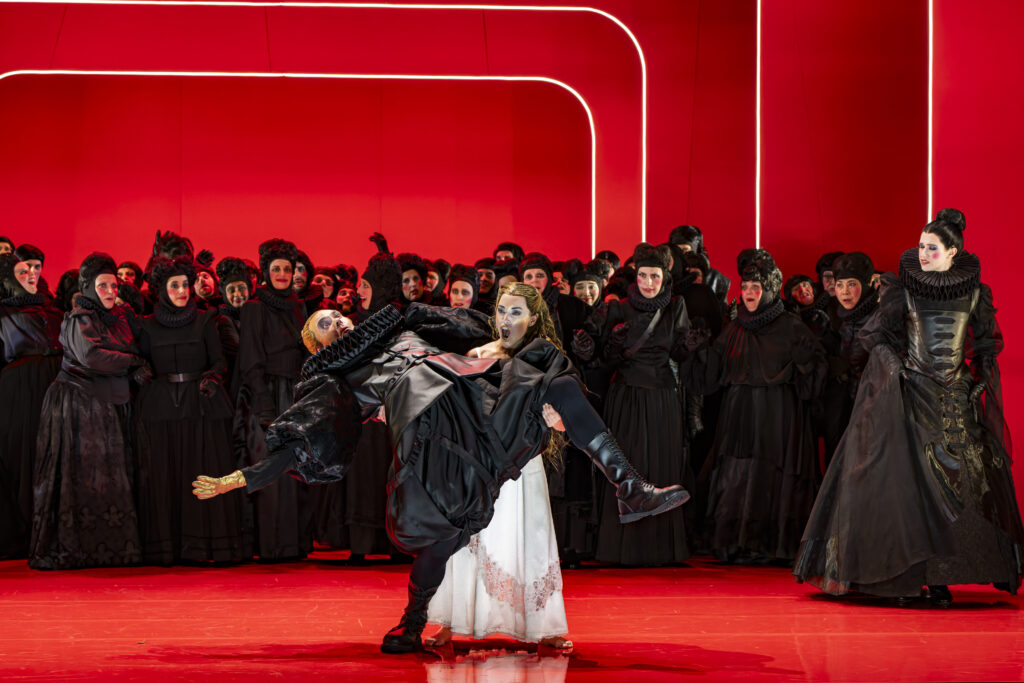
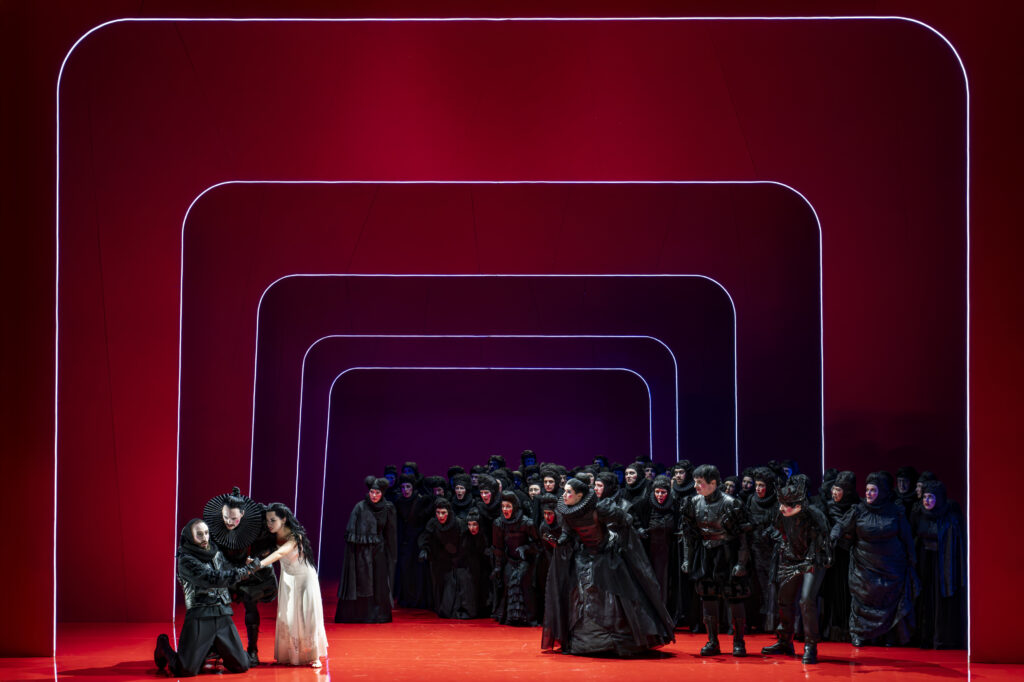
The set was striking in its simplicity: the stage, bathed in red light, featured freestanding red walls and an otherwise empty playing area. At one point, remote-controlled spotlights mounted on carts at either side of the stage swept across, creating a wonderfully atmospheric effect. This minimalist approach kept the focus firmly on the action, the singers, and their interactions – all of which remained central to the production until the very end.
A fresh twist
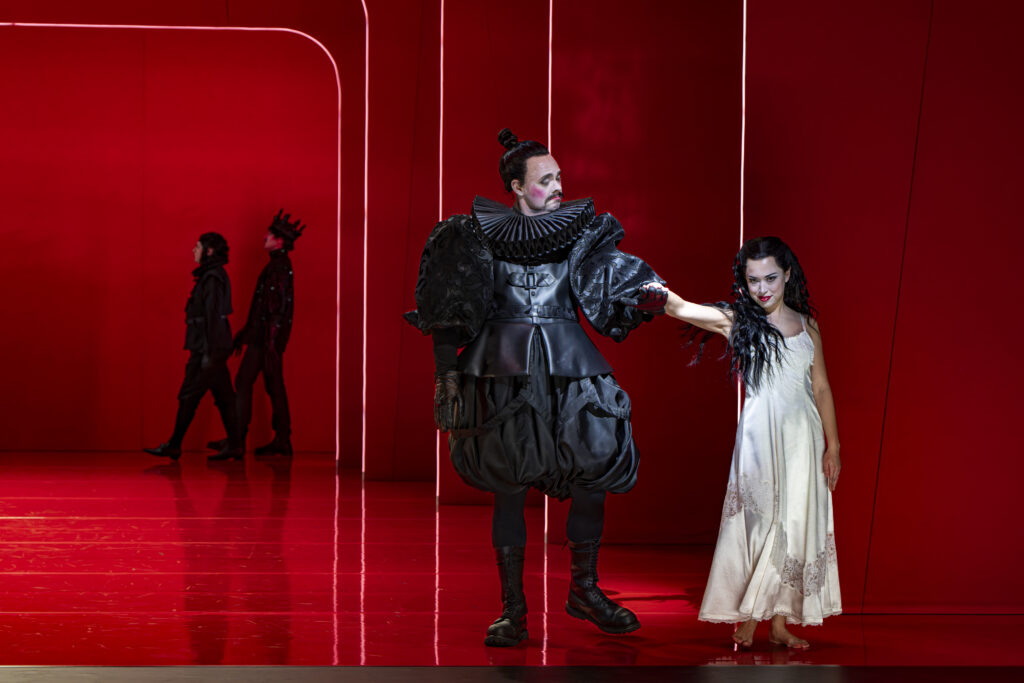
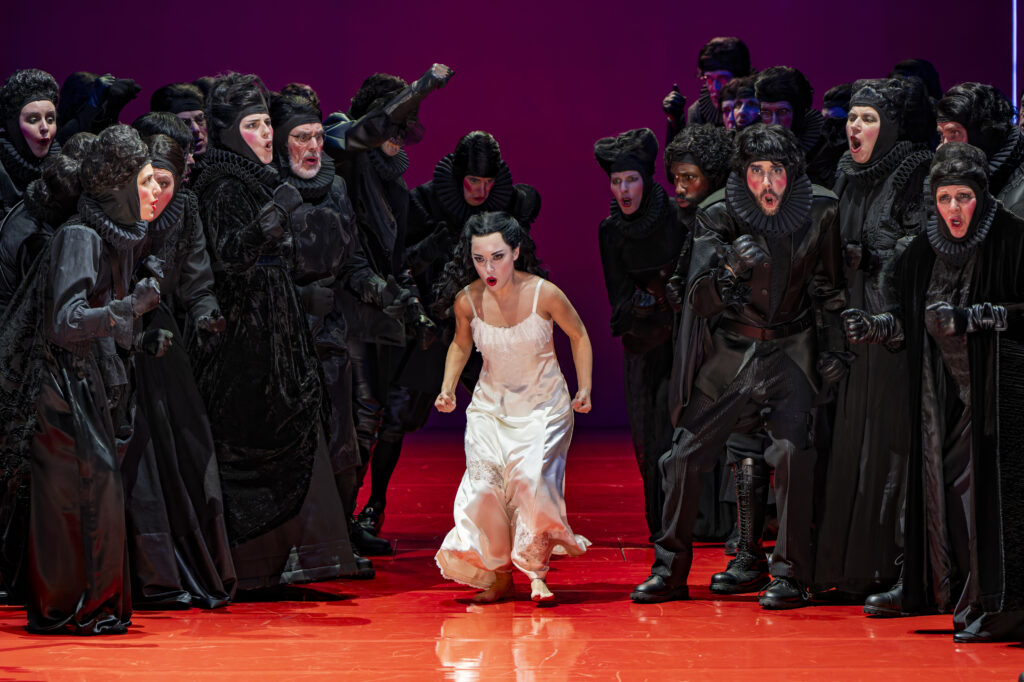
Costumes were stylish and mostly Renaissance-inspired, with creative flourishes – Banquo’s trousers and Macduff’s colorful hair, for example – adding a fresh twist. Cornelius Hunziker’s lighting was atmospheric and perfectly attuned to the drama. The result was a refreshing take on “Macbeth”, a welcome change from the often relentlessly dark interpretations.
In terms of stage direction and movement, Fritsch’s ability to capture the pulse of the music and translate it into dynamic stage action was impressive. The first two acts were especially successful: the action was lively and humorous without ever tipping into farce. Instead, lightness and playfulness propelled the story and echoed the spirit of the music. The humor felt natural and unforced, reflecting the vitality at the heart of Verdi’s score. Unlike many productions, where a disconnect arises between a somber set and exuberant music, here there was a welcome sense of harmony.
Overly playfull
In the second half – acts three and four – Verdi’s music takes on a darker, more mysterious and at times hypnotic quality. It was surprising, then, that the set and lighting did not adapt to this shift in mood. Even a subtle change in lighting could have added much to the atmosphere. At times, the stage direction also felt overly playful – particularly in Lady Macbeth’s sleepwalking scene. Here, we would have preferred the doctor (whose devil’s horns may not have made his role clear to everyone) and Lady Macbeth’s attendant to remain more in the background, allowing Lady Macbeth herself to command the spotlight in her great aria.
Heather Engebretson’s first major scene (“Nel dì della vittoria… Ambizioso spirto… Vieni! T’affretta!… Or tutti, sorgete!”) was a genuine showstopper. Dressed in a white nightdress reminiscent of Lucia di Lammermoor’s mad scene, she danced onto the stage with an eerie presence that called to mind Megan from the eponymous horror film. The letter scene (“Nel dì della vittoria…”) was anything but a beginner’s Italian class reading exercise: Engebretson delivered it with flawless Italian diction and a wonderfully nuanced sense of drama, creating tension from the very start. The following recitative, “Ambizioso spirto”, was marked by dramatic intensity, radiant top notes and perfectly executed coloratura – seamless from the highest notes down to the chest voice. In “Vieni! T’affretta!…”, she offered a richly colored, nuanced interpretation, with whispered syllables and menacing undertones. The final “Or tutti, sorgete” dazzled with fearless high notes and lightning-fast, precise coloratura. Her ascent to the high B, combined with a touch of diva-like stage presence, made this a highlight of the evening. The enthusiastic applause and shouts of “Brava” from the audience were richly deserved.
Vocal excellence
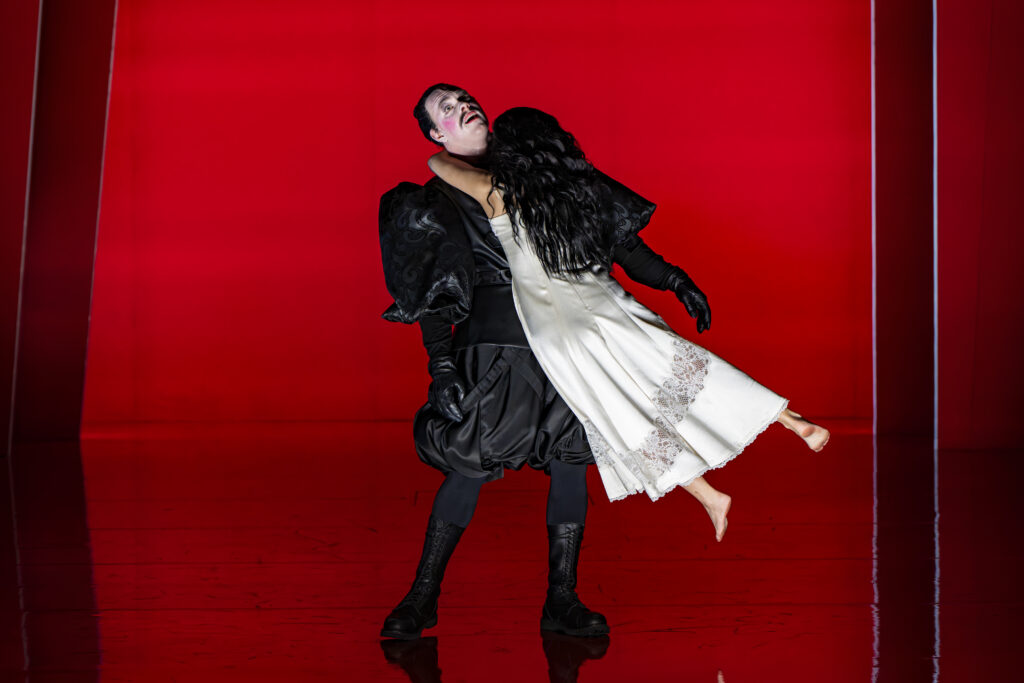
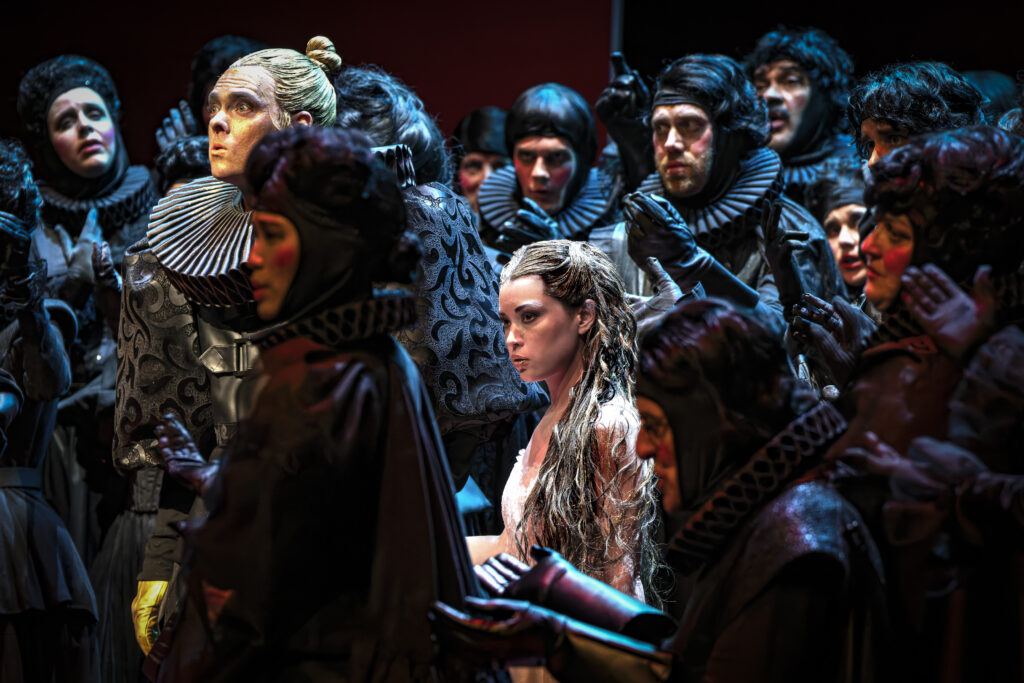
In her big aria in Act IV, “Una macchia è qui tuttora”, Engebretson impressed by maintaining vocal excellence despite demanding stage action – a testament to her technical prowess. Admittedly, a pianissimo on the final high D-flat would have been ideal; instead, the note came out brusquely fortissimo. However, she sang the final bars while lying on her back, cradled in the doctor’s arms – an additional challenge. Given her previous mastery, it is fair to assume this powerful approach was a deliberate artistic choice.
We could not help but wonder if Iain MacNeil is related to the great Verdi baritone of the 1960s, Cornell MacNeil. With commanding stage presence and agility – he even managed a cartwheel or two – and a beautiful, velvety voice, he made a convincing Verdi baritone and would surely make a superb Rigoletto. His chemistry with Lady Macbeth was excellent; both blended vocally and dramatically, complementing each other perfectly. His voice is warm and supple, the middle register reminiscent of Sherrill Milnes. In his Act IV aria, “Pietà, rispetto, amore”, he occasionally sounded a little unsettled and less controlled, something not evident in earlier scenes with Lady Macbeth. There was also a hint of uncertainty in the cadenza. Even so, the overall impression was of a highly musical, tasteful, and ideal Macbeth.
Hope Nelson was a delight as Lady Macbeth’s attendant. Though a supporting role, she brought real presence through lively, humorous movement and gesture. Vocally, too, she impressed: her ringing top notes in the Act I finale radiated sheer joy. You could almost sense the pleasure of singing such music.
Rolf Romei
Rolf Romei, still fondly remembered as a superb Siegfried in Basel’s “Ring”, made the most of his stagecraft as Macduff. With expressive presence, comic timing, and a fine sense of drama, he gave the character a distinctive blend of depth and humor. In his aria “Ah, la paterna mano”, we would have welcomed a little more phrasing and emotional nuance; his middle register was a touch constrained. In the upper register, however, his tenor was open and free, conveying Macduff’s pain and despair.
Marius Aron took on Banquo and delivered his aria “Come dal ciel precipita” with a cultivated bass. At times, though, his voice could have projected more. One wondered if he was simply too far upstage, or if the orchestra might have played more discreetly. As a result, the aria’s impact was somewhat muted, and the scene’s dramatic resonance did not reach the desired depth.
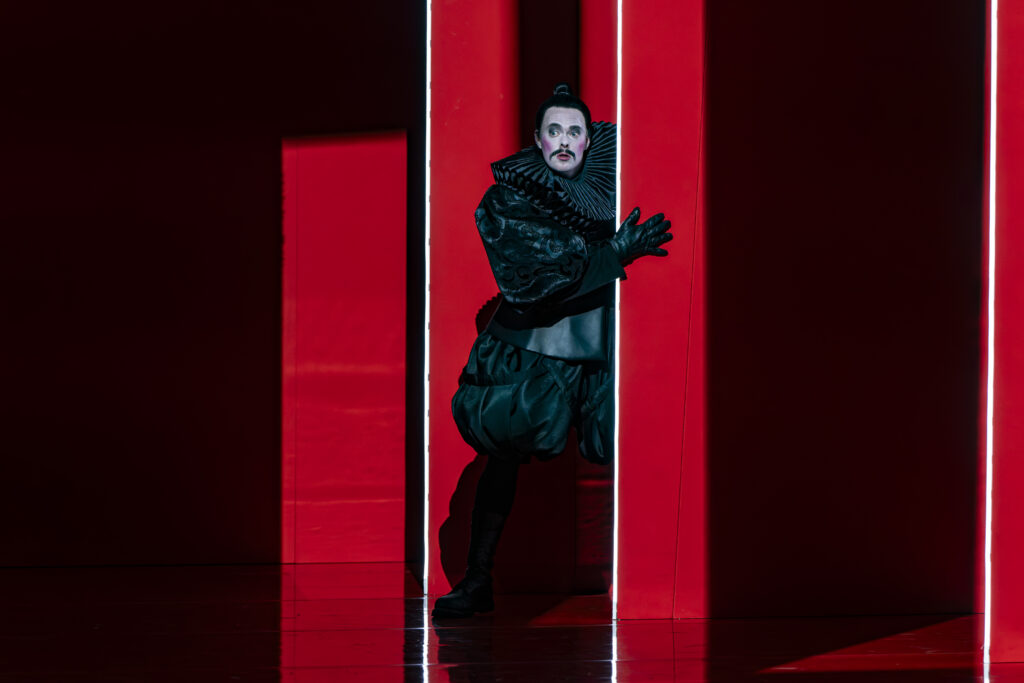
The strong cast was rounded out by Ervin Ahmeti (Malcolm), Nathan Schludecker (Servant, Murderer, Apparition) and Peter Keller (King Duncan). Serafin Müller (Knabenkantorei Basel) played Fleance, with the two apparitions portrayed by Serafin Müller and Emile Schubert, both from the Knabenkantorei Basel.
All in all, this was a wonderful evening at the opera – the sort of performance you want to see more than once. A true treat for lovers of great singing, set within a production that was original and creative in the best sense. What would be called “Regietheater” – director’s theatre – in German-speaking countries seems an unfair label here. The term is often used pejoratively, and it simply does not fit. Respect was always at the forefront. So was deep understanding of the work and the music. The direction took Verdi and his score seriously, while still finding fresh, original imagery. One can only hope other directors take inspiration from this. This production is highly recommended.