Scylla et Glaucus
Performance attended: 27 March 2026 (Premiere), Zurich Opera House
Tragedy in music in a prologue and five acts by Jean-Marie Leclair (1697–1764), libretto by d’Albaret after Ovid’s “Metamorphoses”
Musical Direction: Emmanuelle Haïm
Stage Direction: Claus Guth
Circé: Chiara Skerath; Scylla: Elsa Benoit; Glaucus: Anthony Gregory; Témire: Gwendoline Blondeel; Hécate: Ekkehard Abele; Dorine: Jehanne Amzal; A Shepherd: Daniel Brant; A Wood Spirit: Peter Strömberg; Amor: Piroska Nyffenegger; Dancers: Emma Bas González, Pietro Cono Genova, Sara Peña, Maren Kathrin Sauer; Orchestra: Le Concert d’Astrée; Chorus: Zurich Sing-Akademie; Supernumeraries: “Statistenverein” at Zurich Opera House
Music: 4****
Staging: 2**
Scylla et Glaucus
For Scylla et Glaucus, the internationally acclaimed orchestra “Le Concert d’Astrée”, under the baton of Emmanuelle Haïm, graced the stage – one of the world’s leading exponents of historically informed performance practice, and, for us, the very reason we were determined not to miss this production. Haïm, who began her career with William Christie at “Les Arts Florissants” and founded her own ensemble in 2002, has released numerous award-winning recordings with “Le Concert d’Astrée”, including their much-admired interpretation of Monteverdi’s “L’Orfeo”. Her unmistakable, physically expressive conducting style, rhythmic precision, and ability to bring Baroque music vividly and expressively to life are also evident in this Zurich production.
In the current staging of Jean-Marie Leclair’s Scylla et Glaucus at Zurich Opera House, the orchestra, under Haïm’s direction, delivers a transparent, energetic sound that perfectly captures the Baroque drama and the dance-like elements of the score. Haïm’s conducting is marked by infectious drive, stylistic authenticity, and emotional depth. The Baroque sound world is rendered with great clarity, allowing Leclair’s music to be experienced in all its variety and drama.
Star of the evening
Particularly striking is the orchestra’s excellent intonation and precision – especially in the many rapid string passages. With period instruments, one sometimes expects the odd sour note, a hesitant response, or the occasional squeak from the winds – but here, nothing of the sort! The rhythmic energy and tonal subtlety invite the audience to be swept along by the music – no wonder the orchestra became the star of the evening and received the most enthusiastic applause.
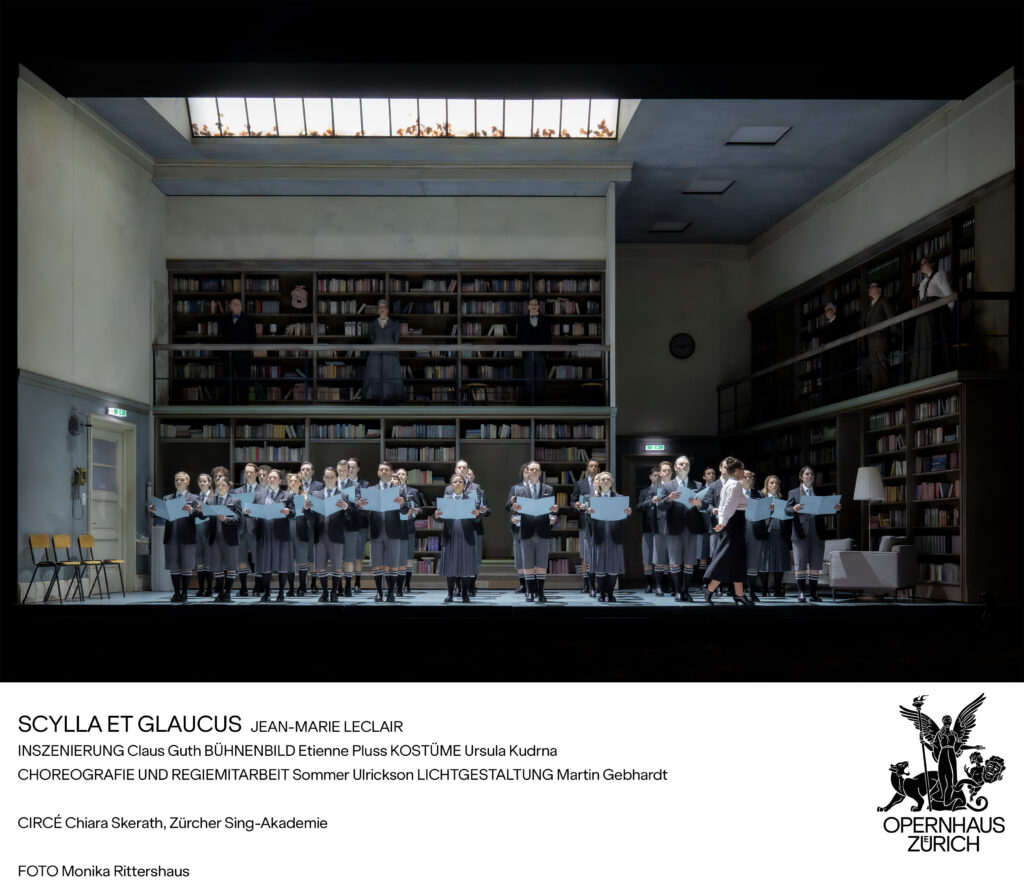
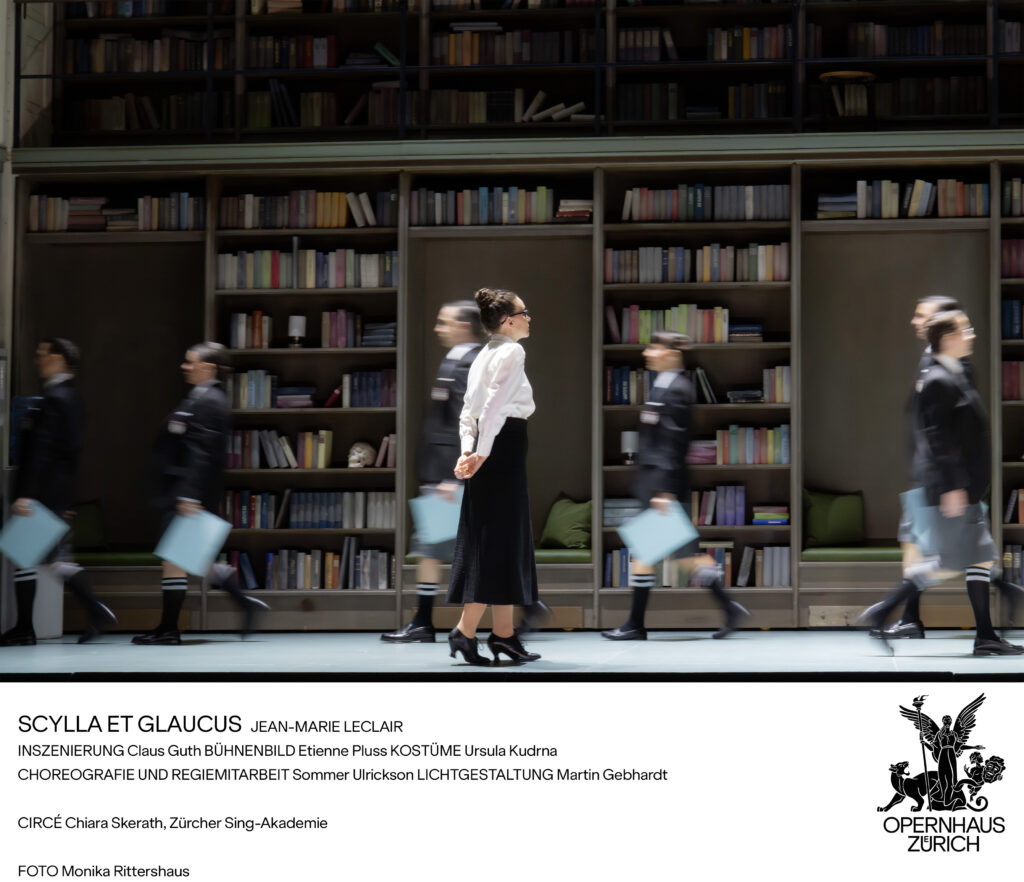
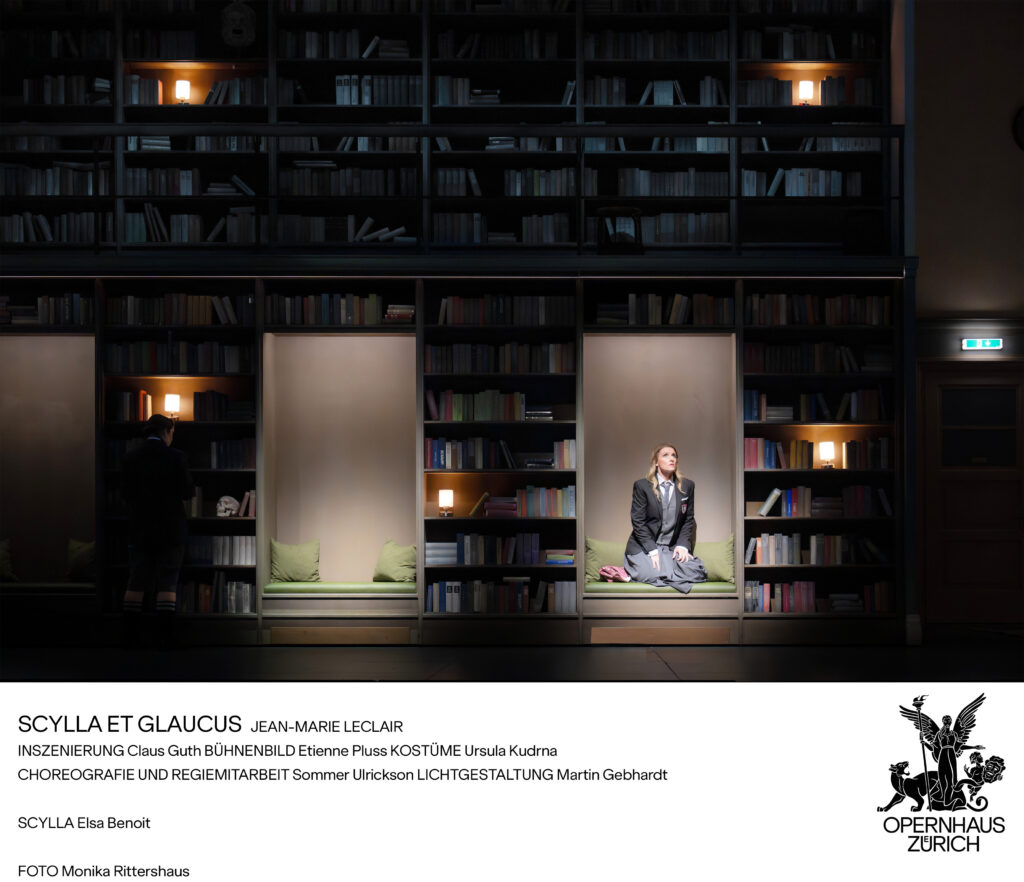
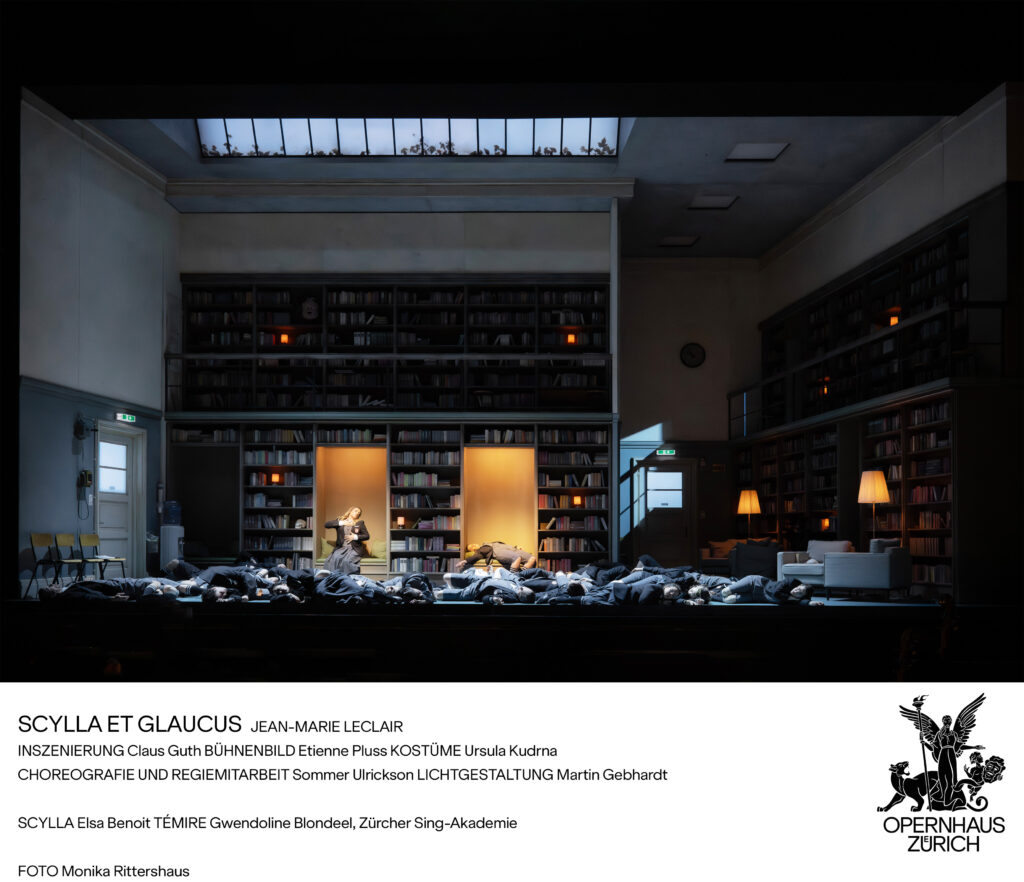
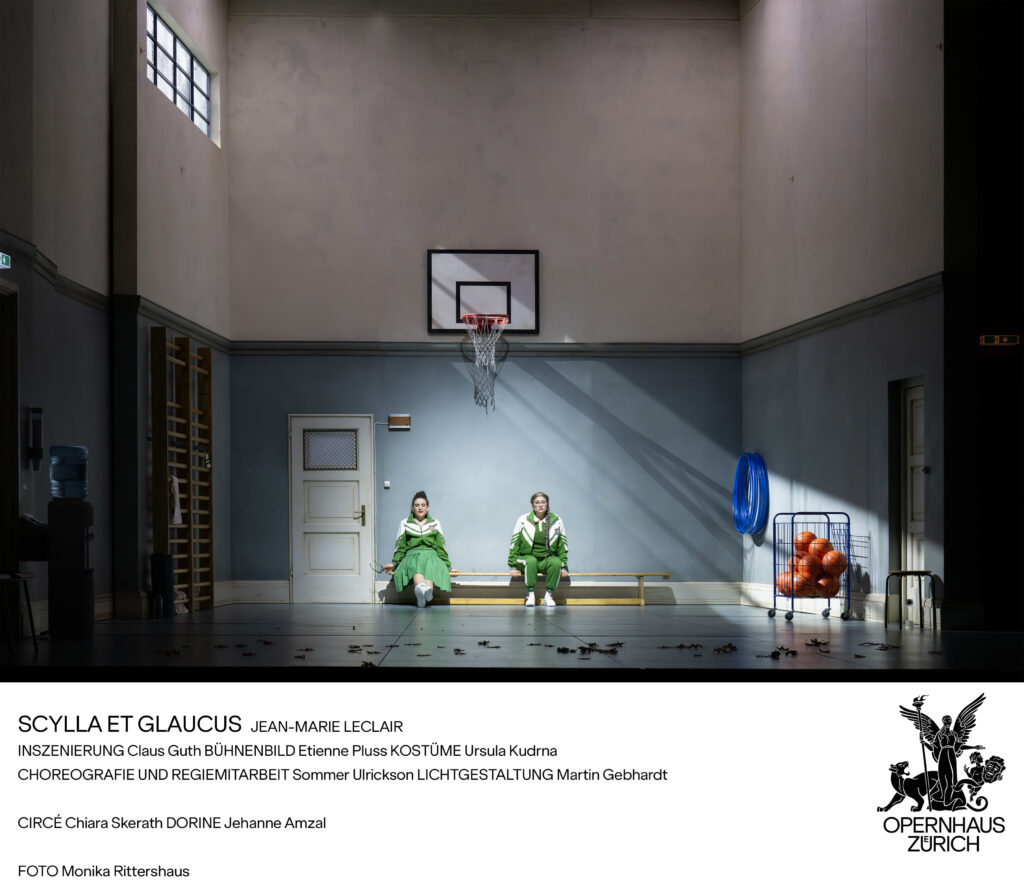
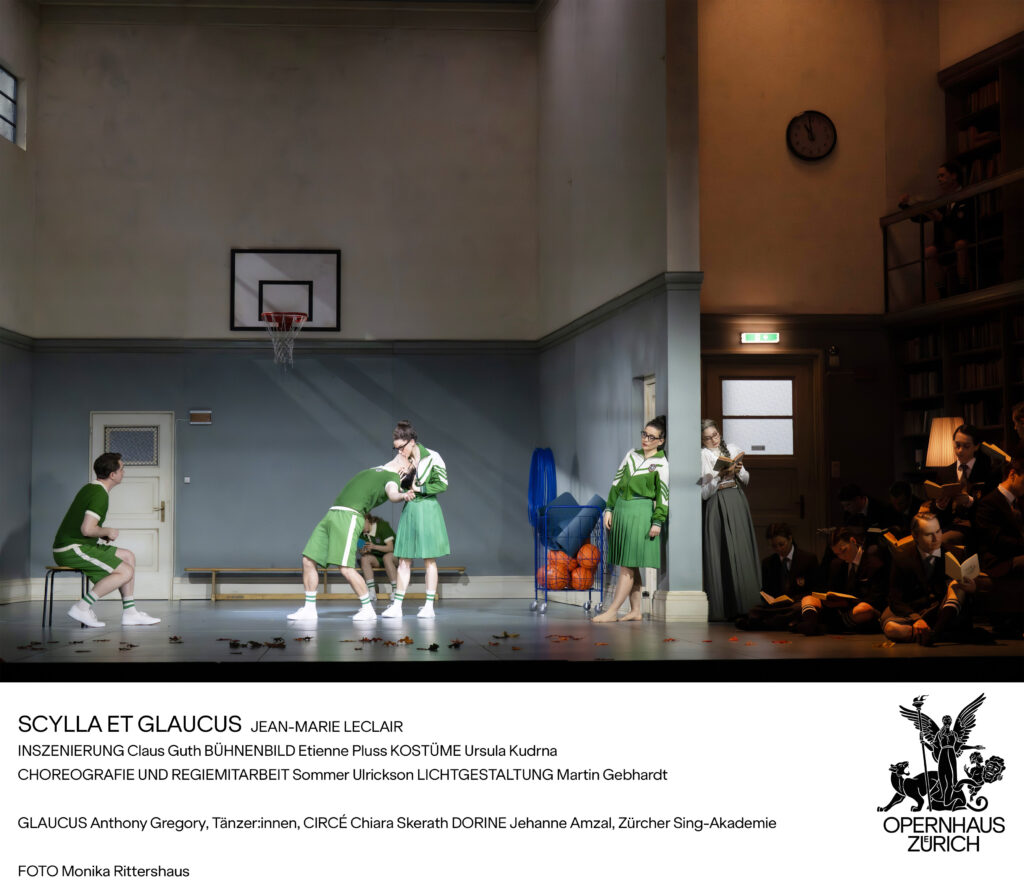
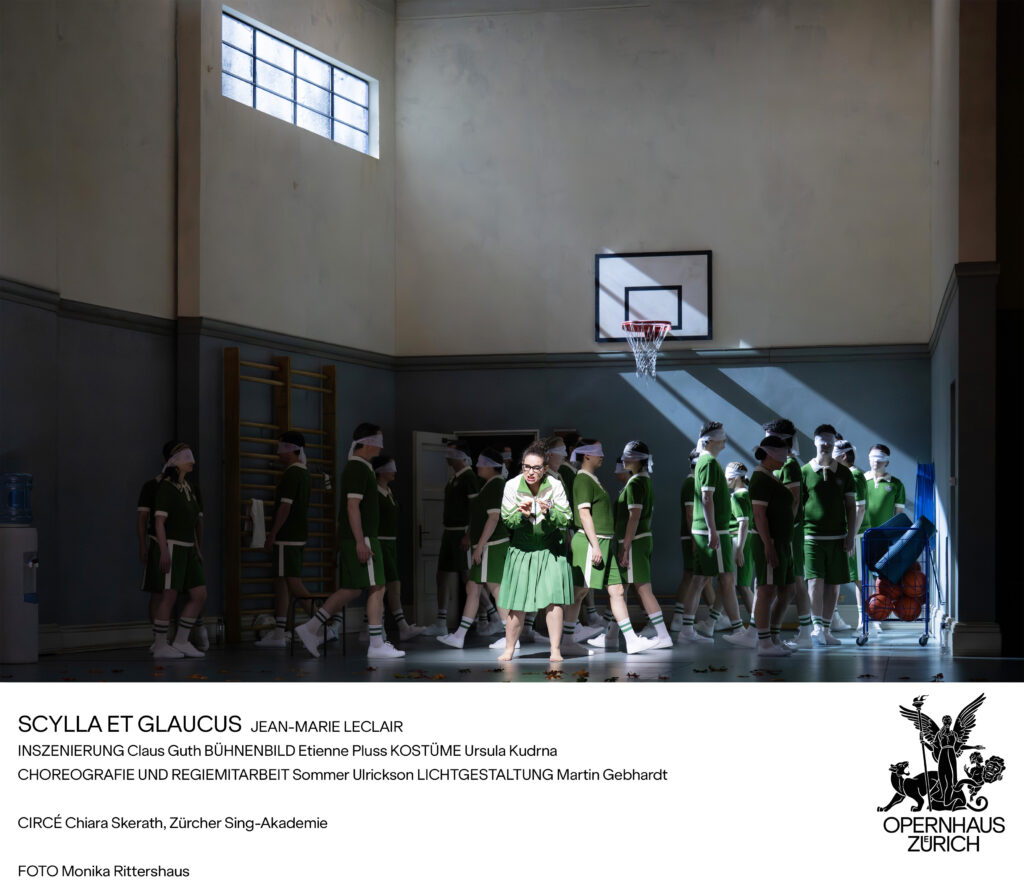
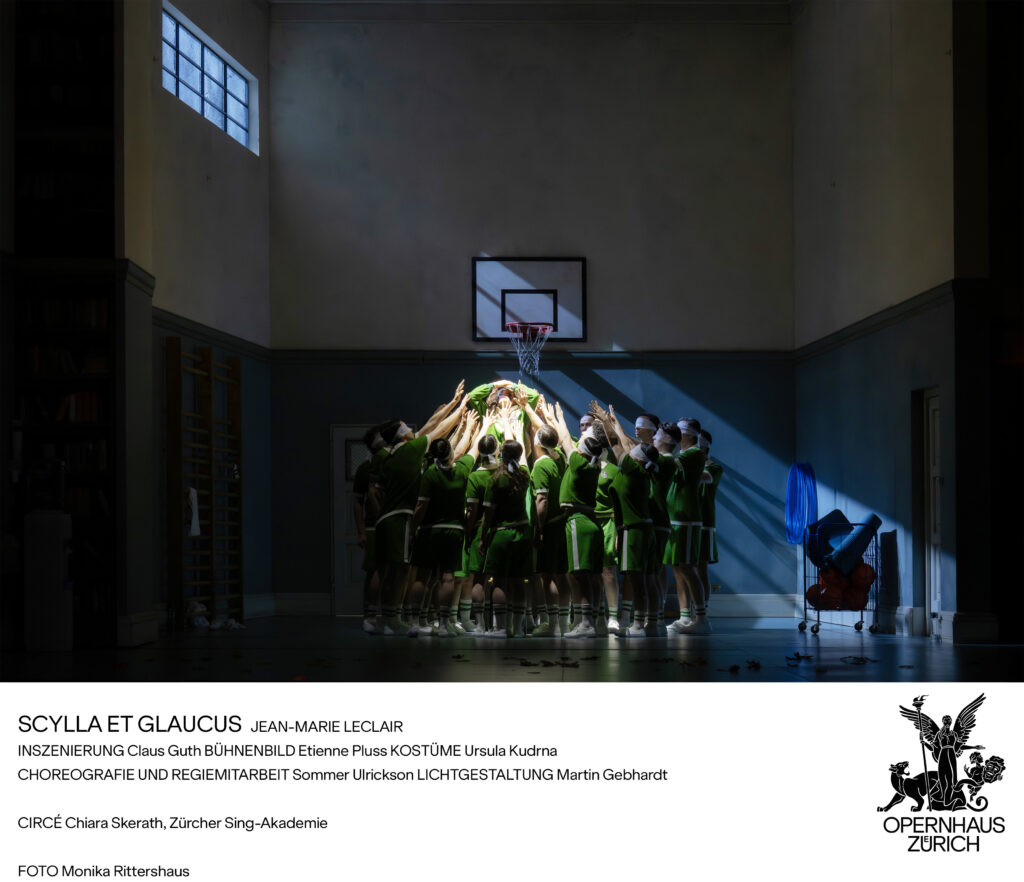
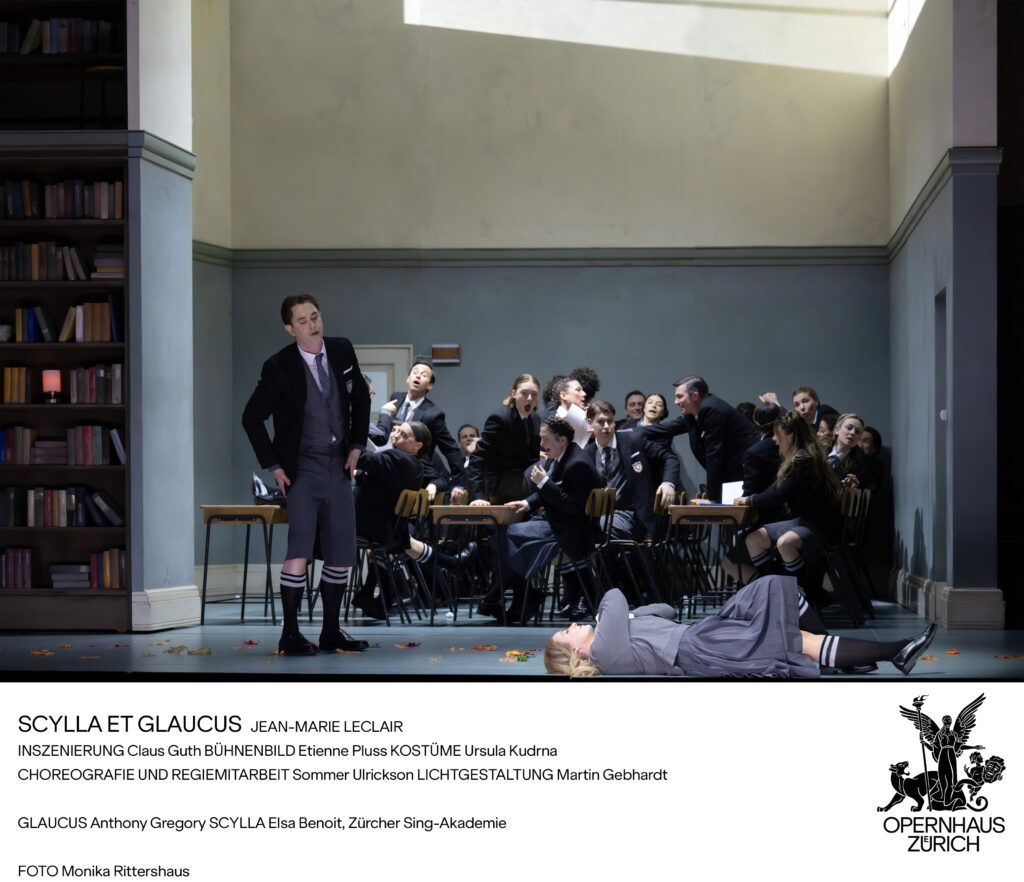
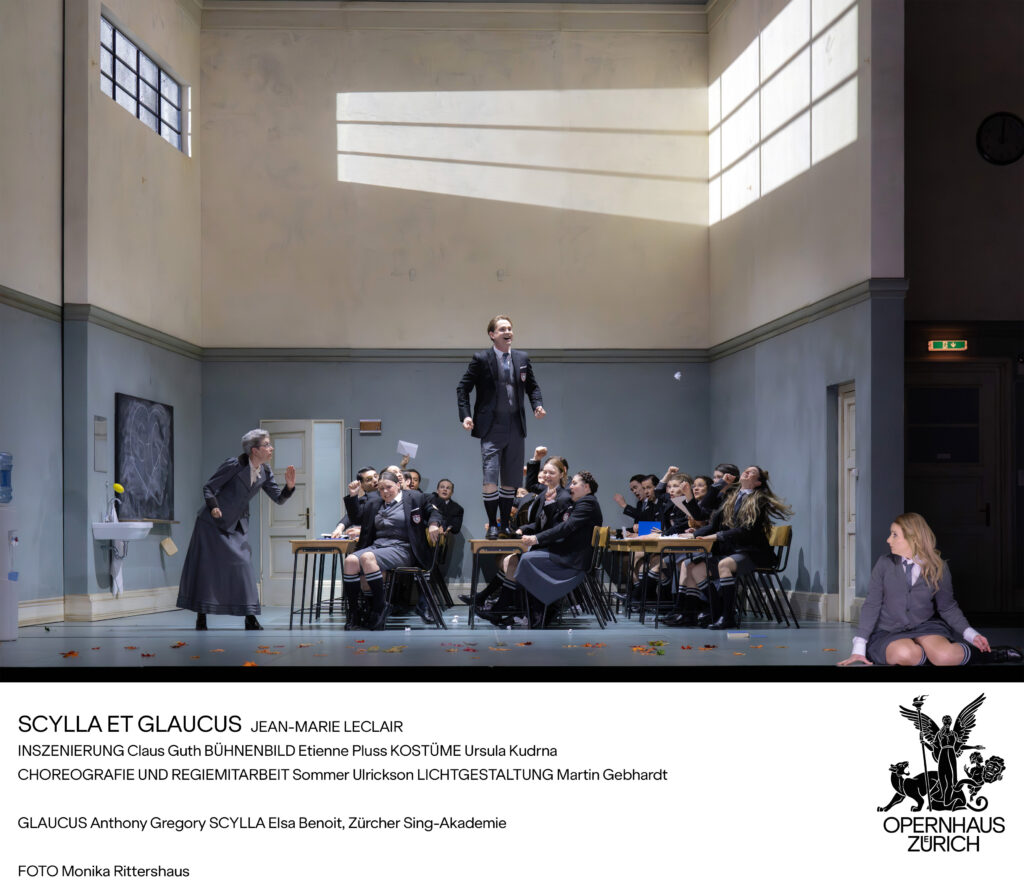
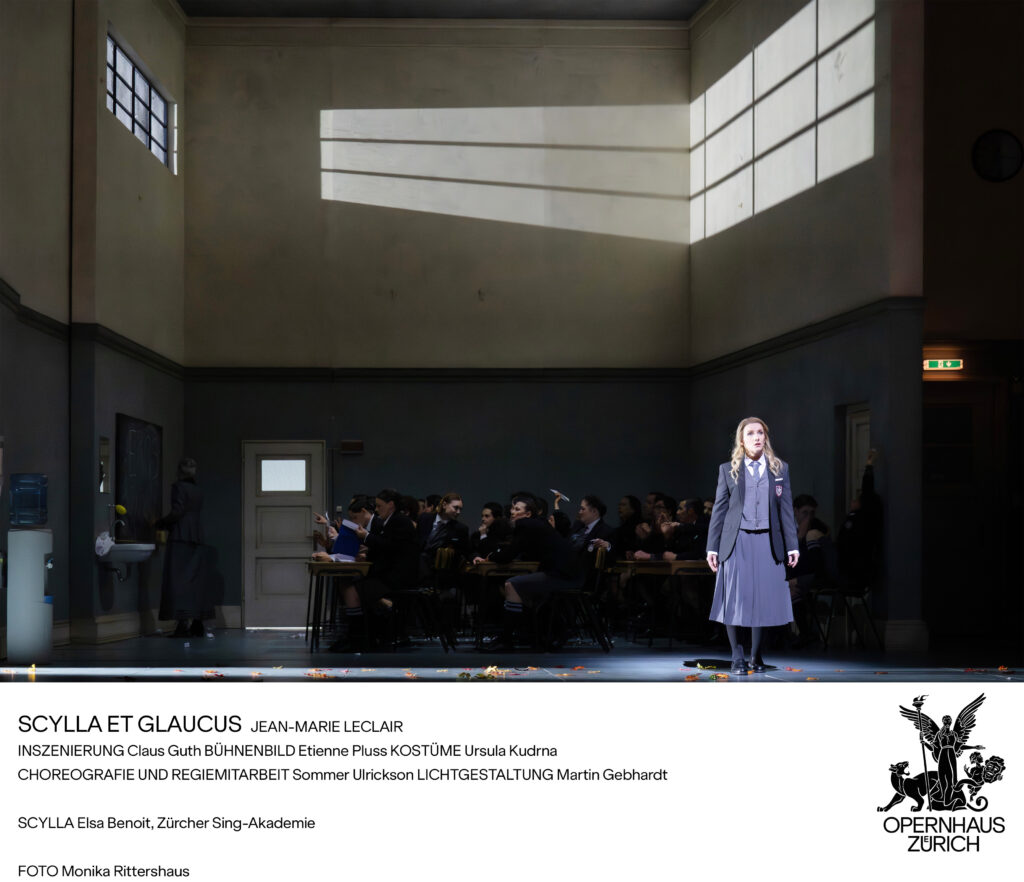
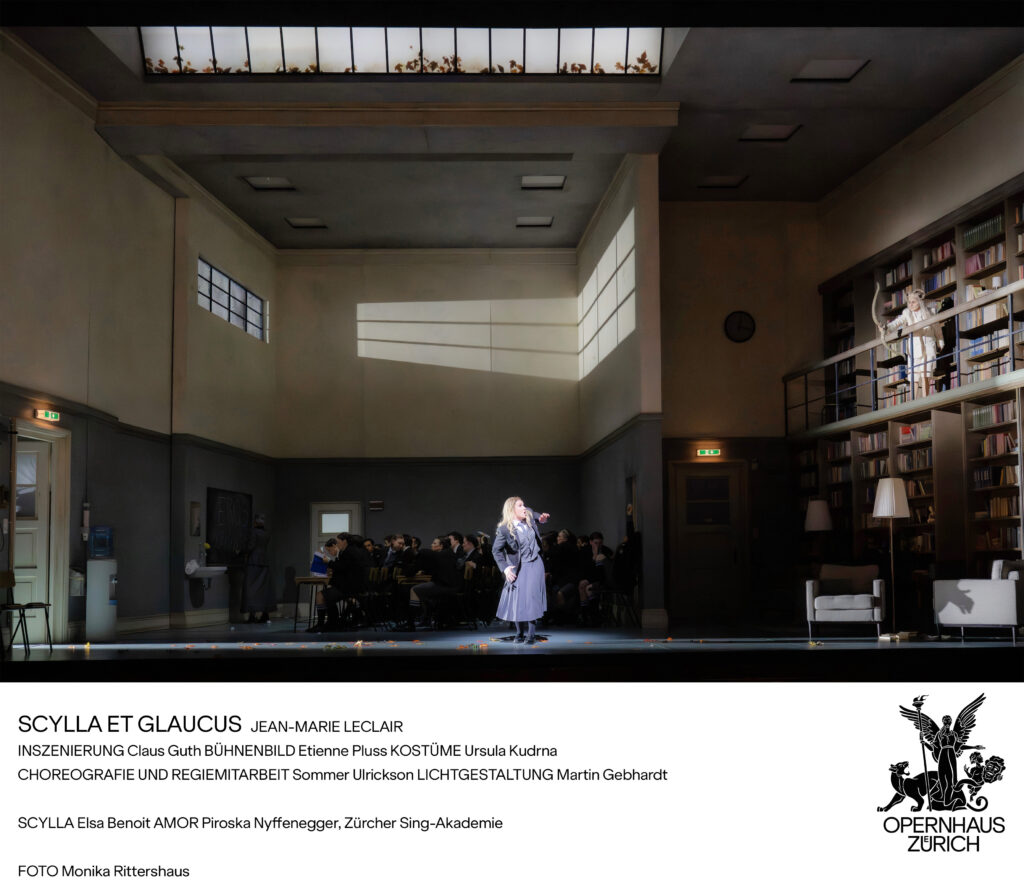
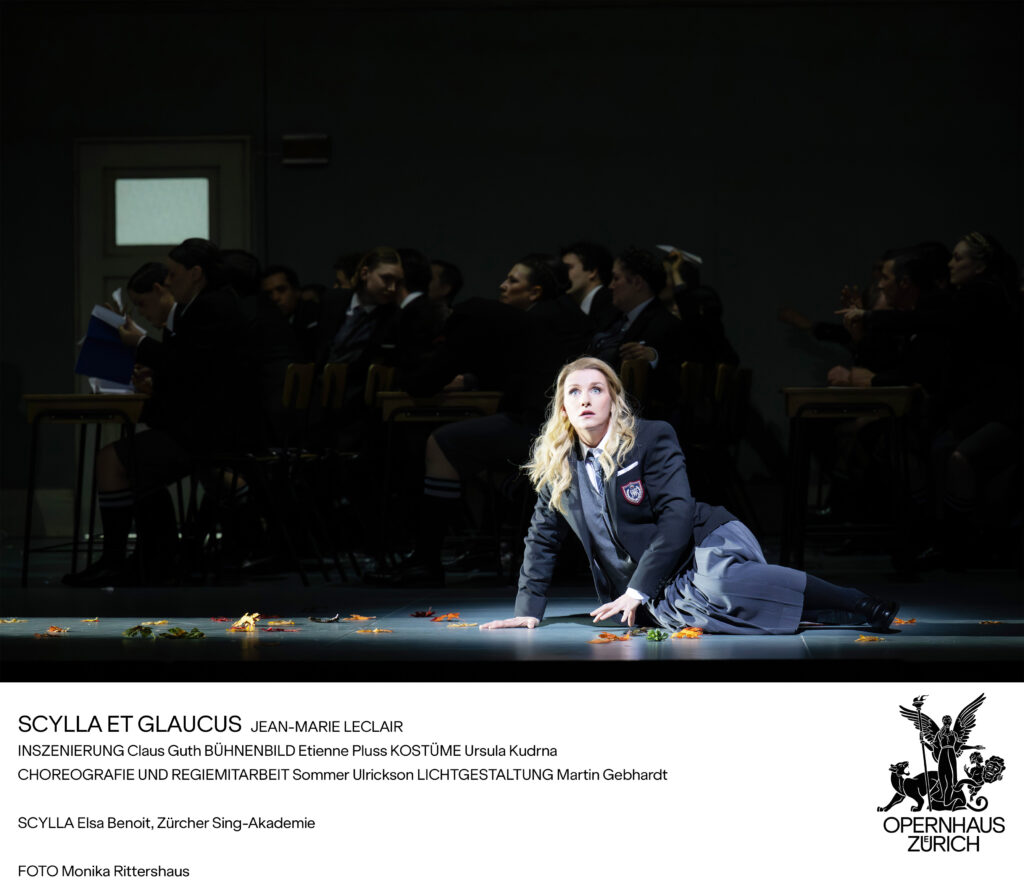
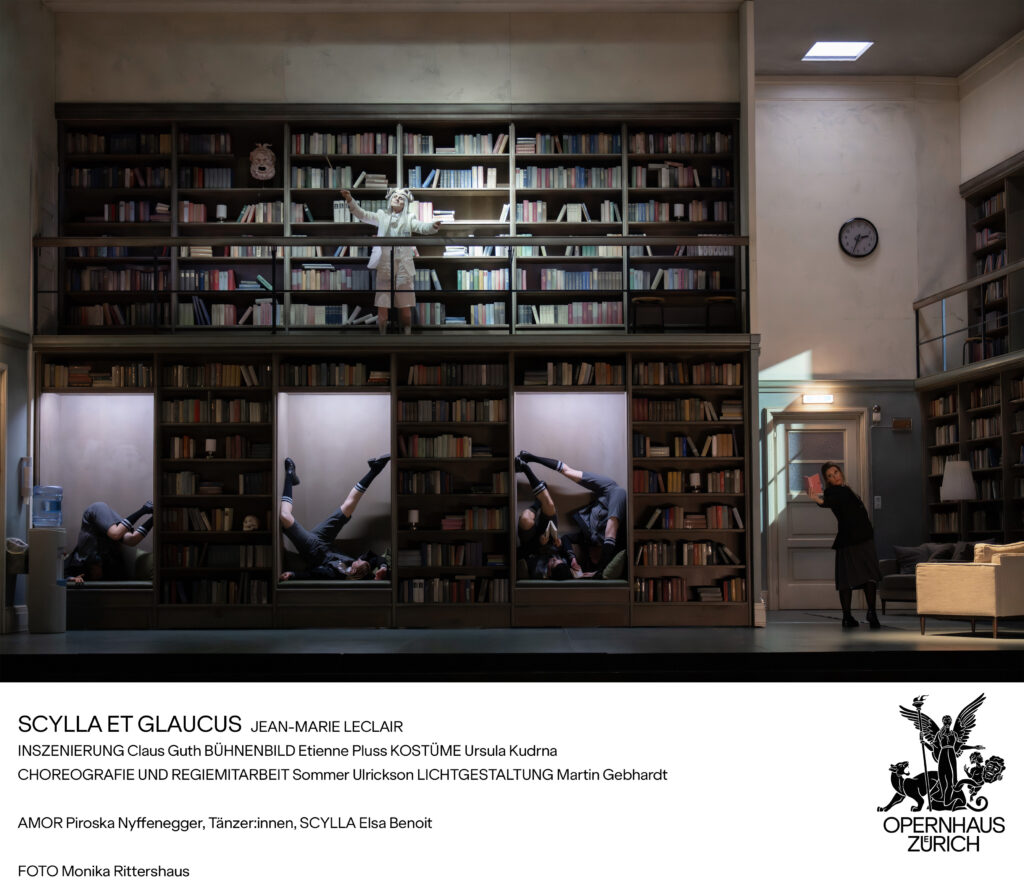
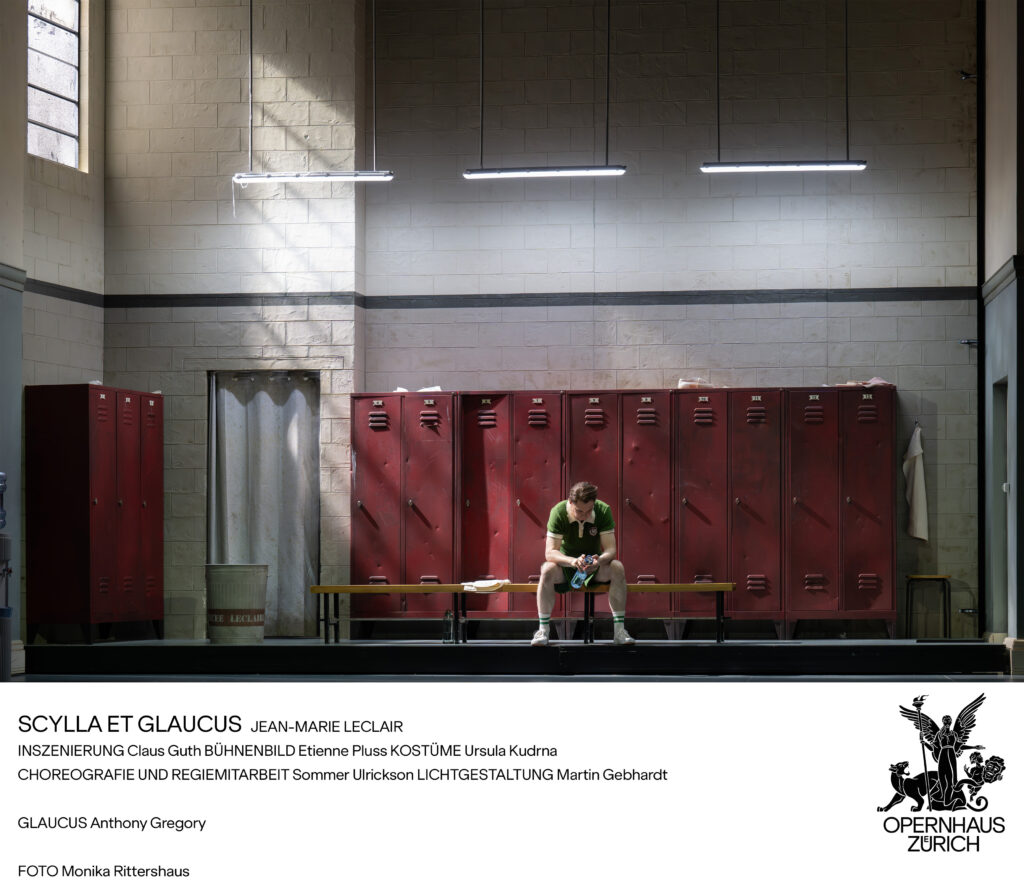
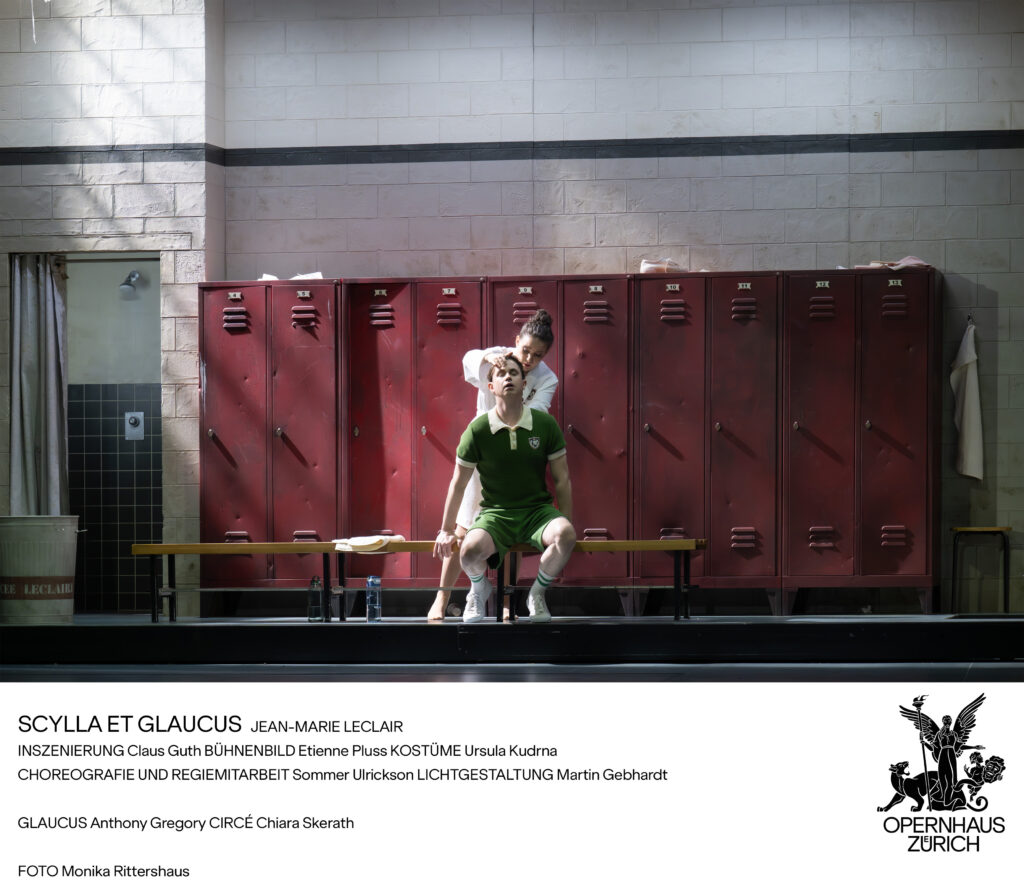
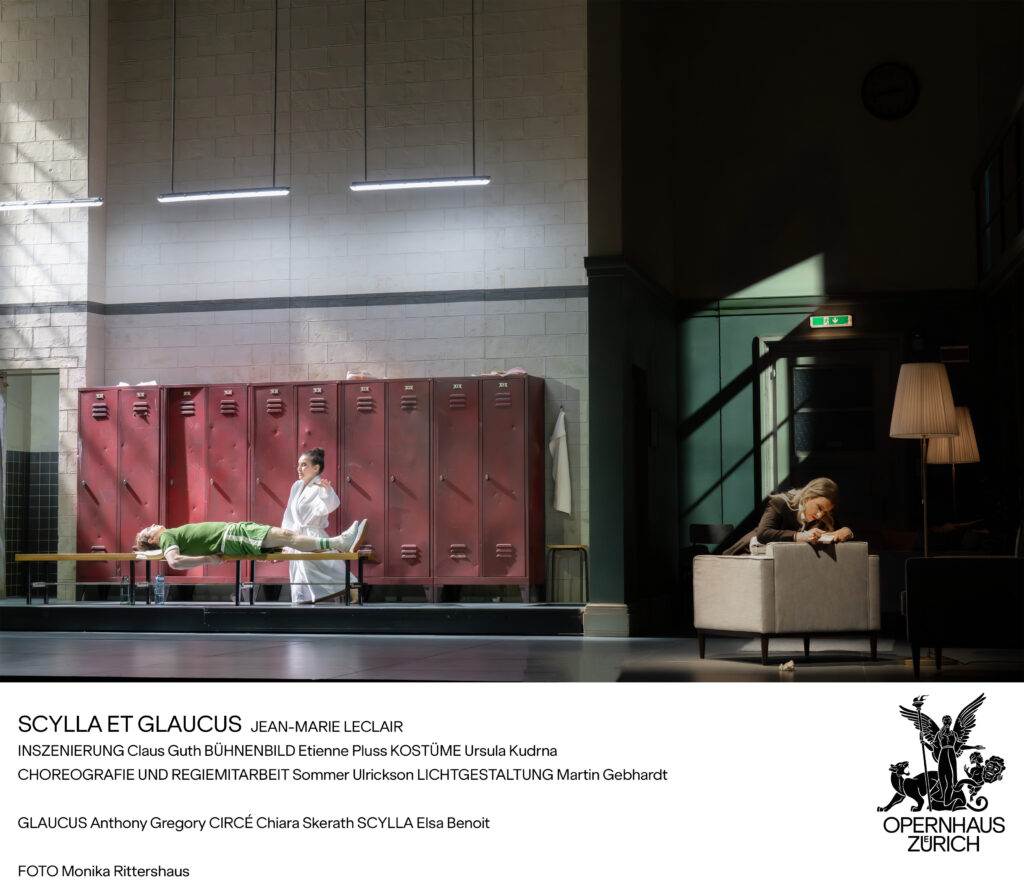
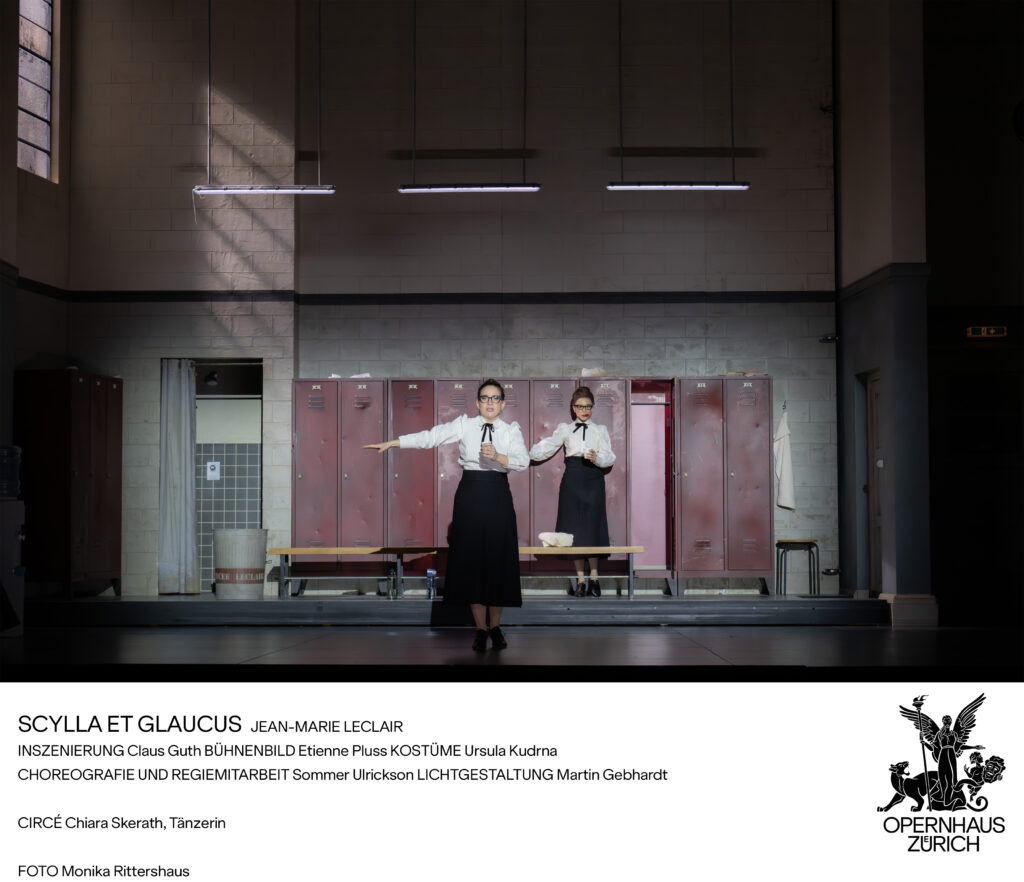
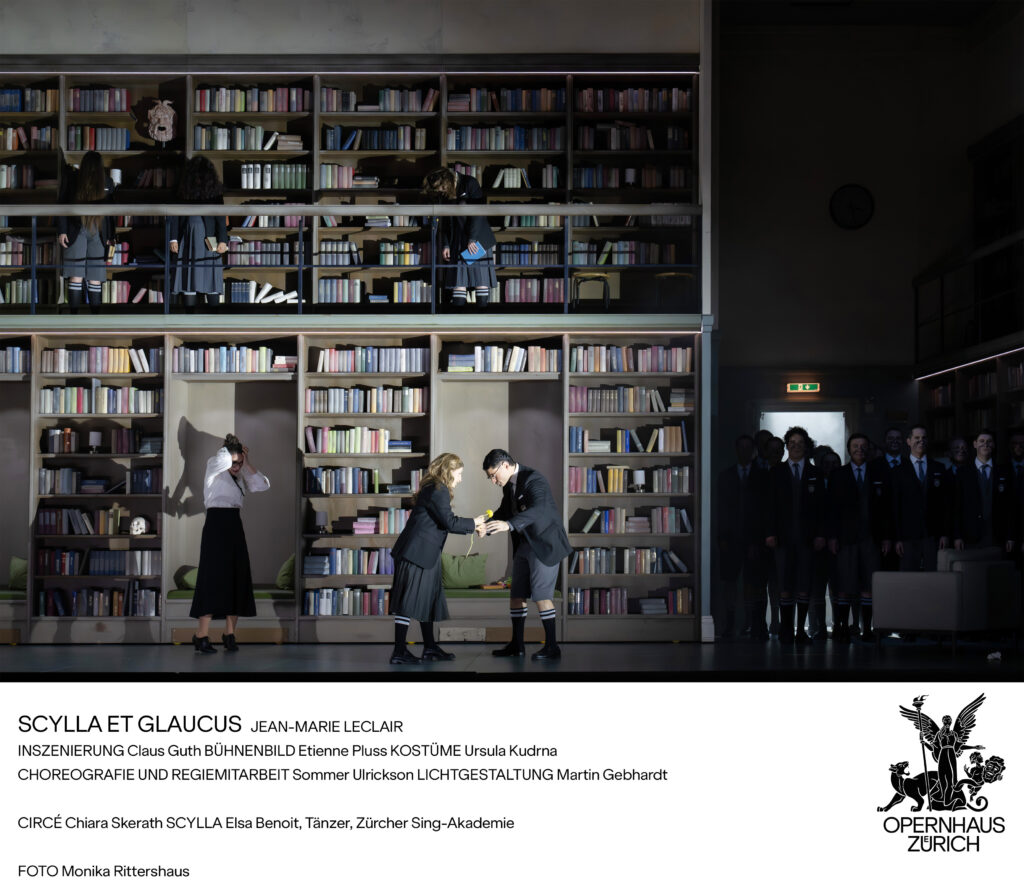
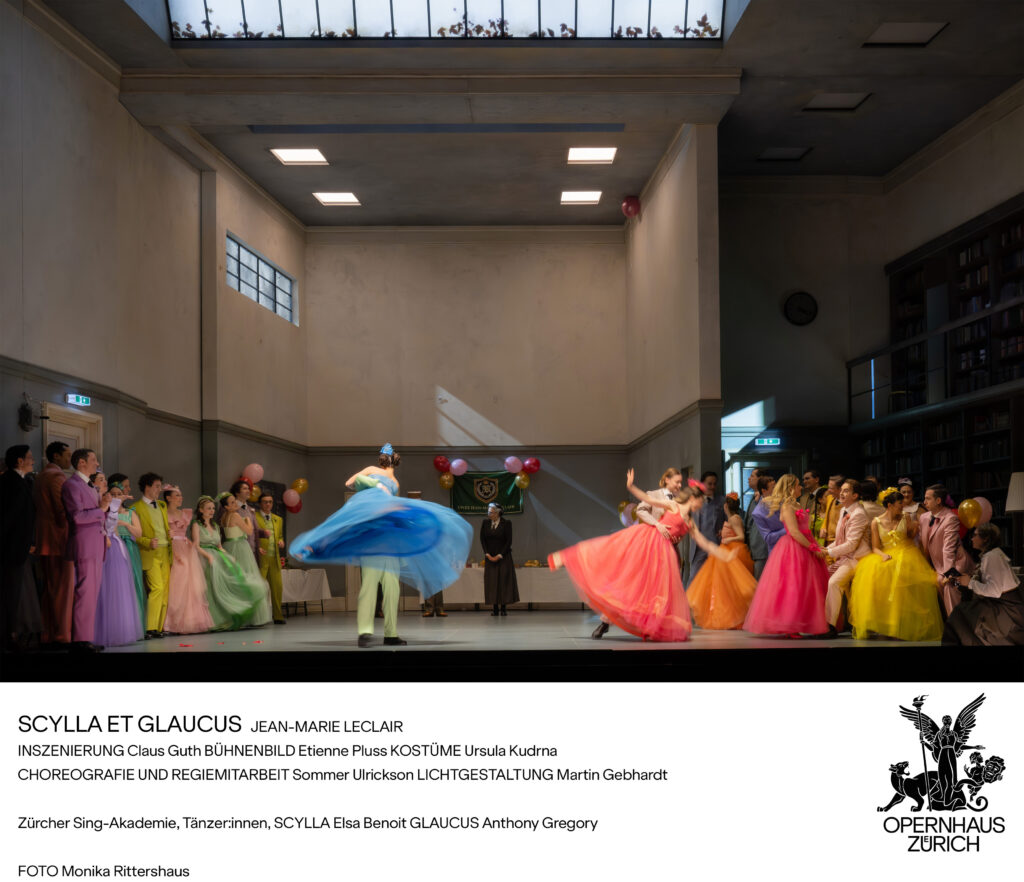
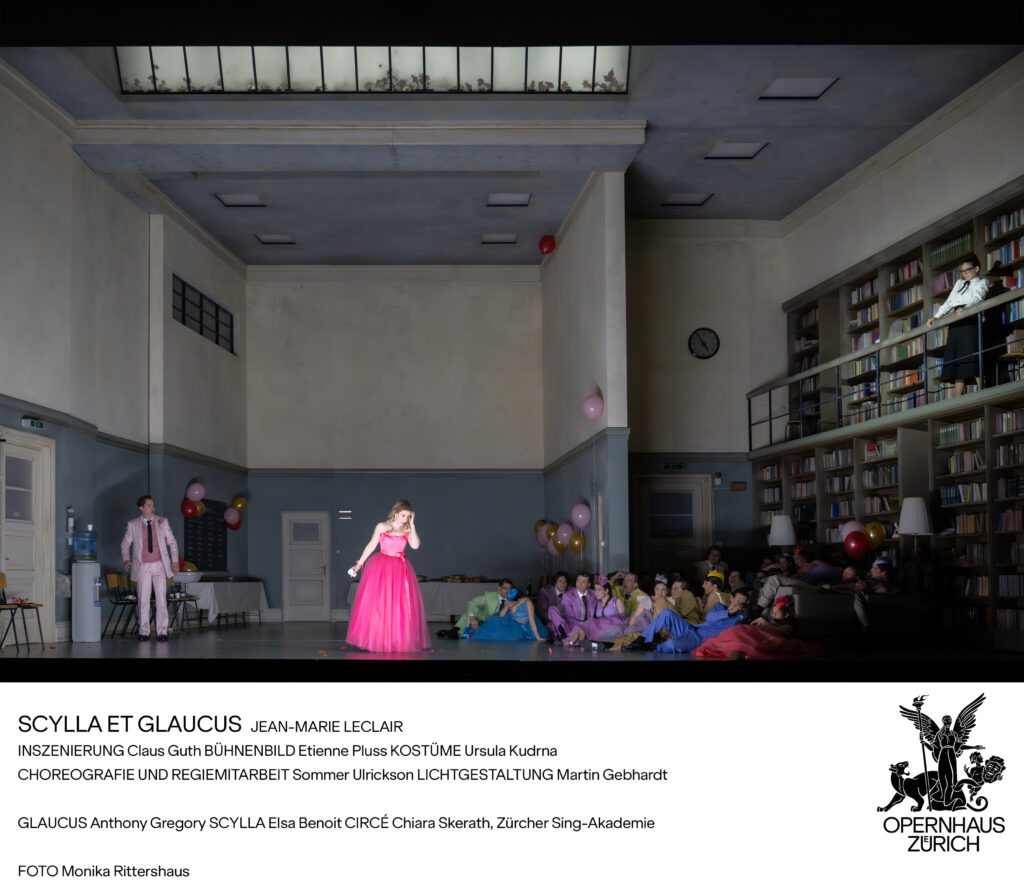
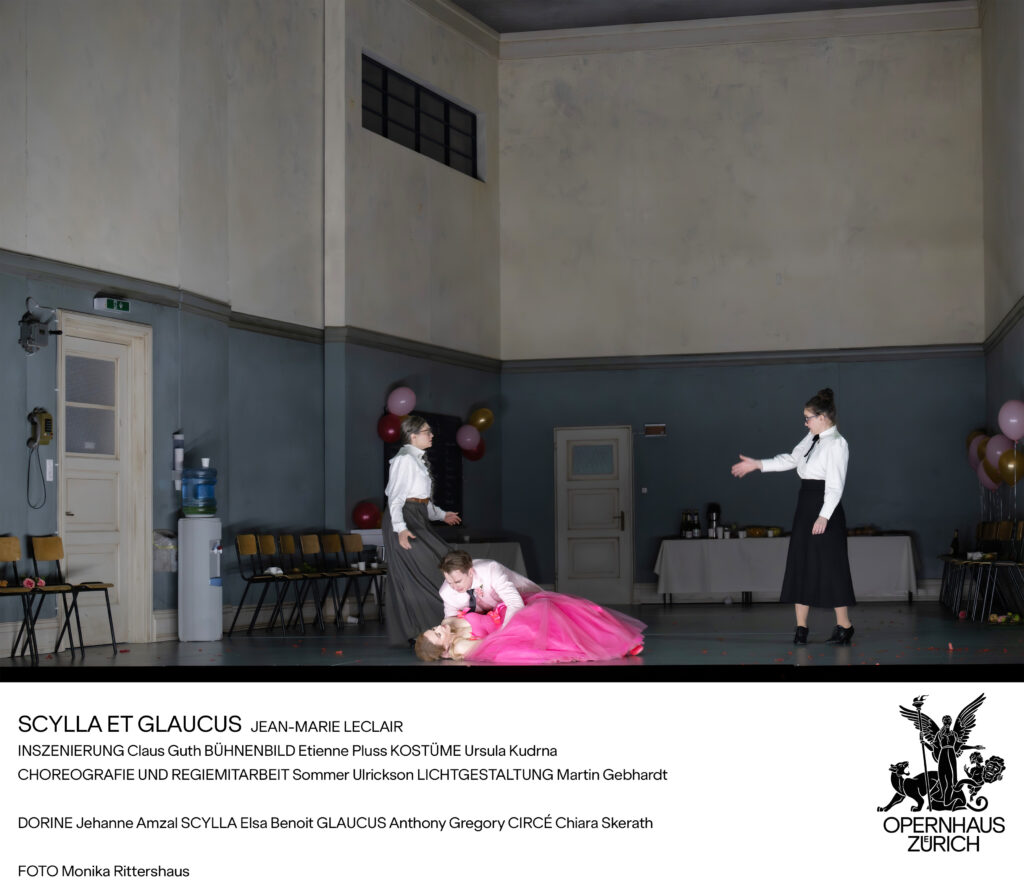
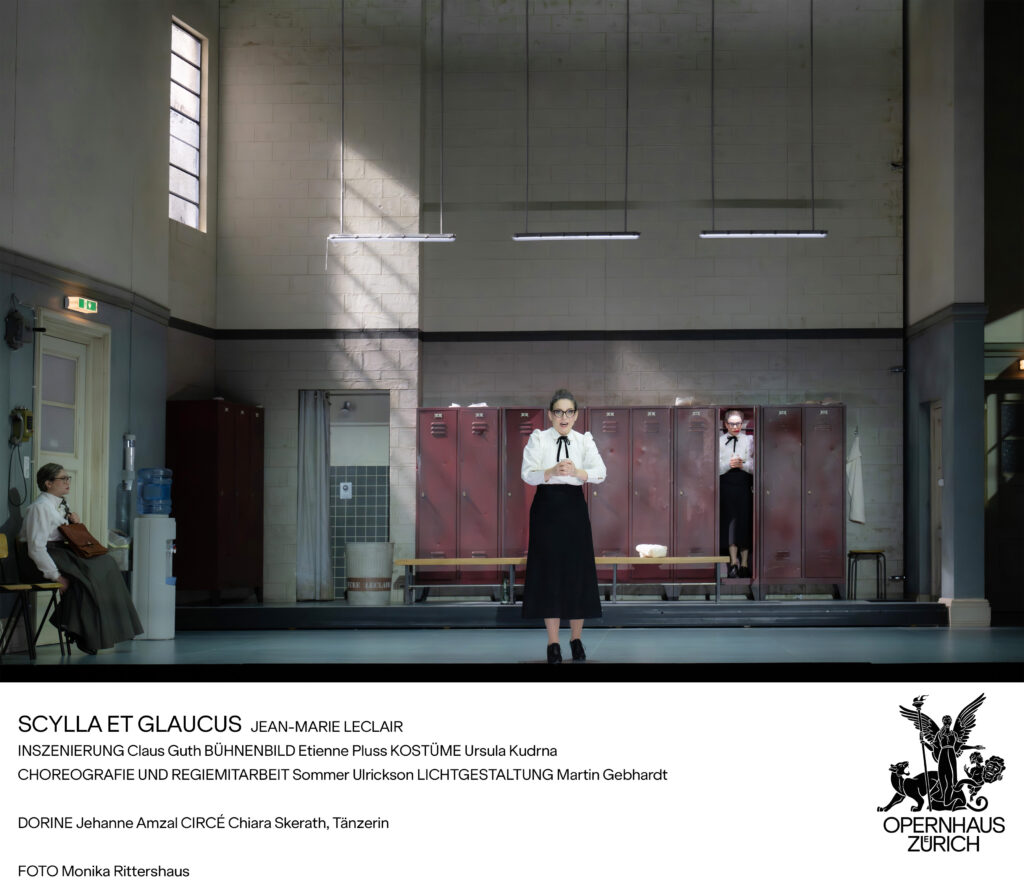
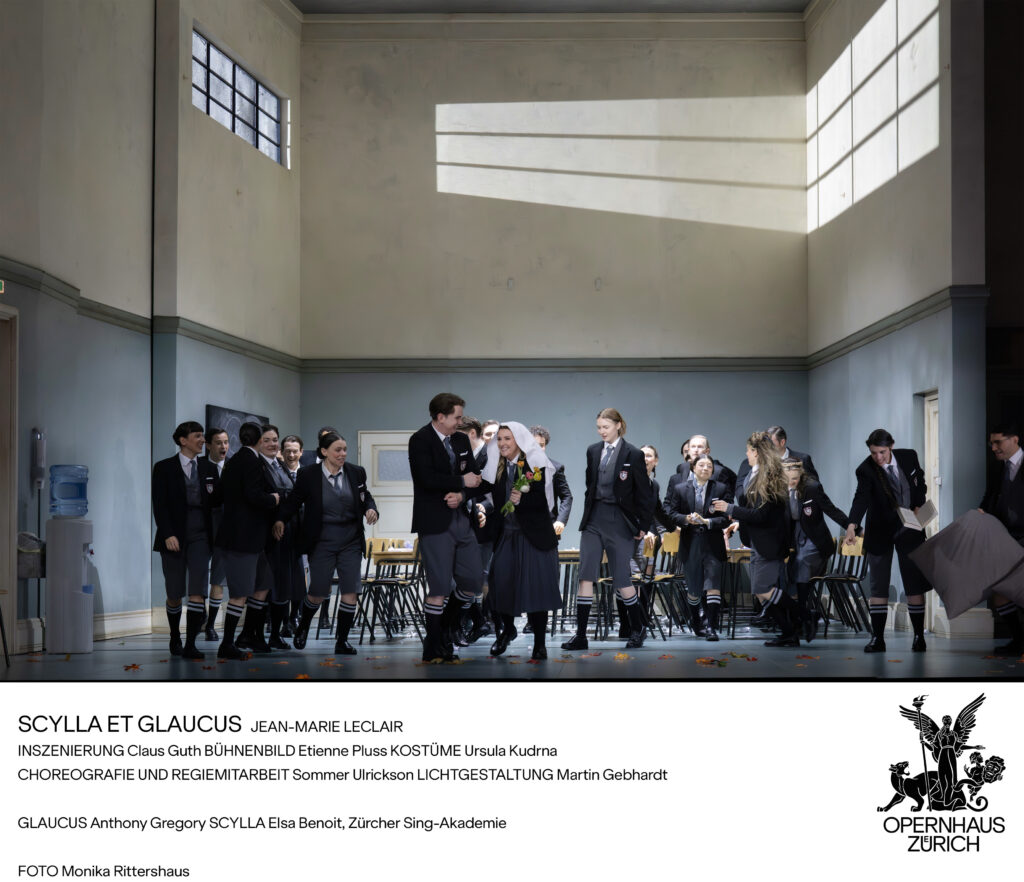
At the start, the curtain was closed, which already put us in a favorable mood towards the production – even if it was not the heavy red velvet, but a lighter black fabric. When it rose, we were presented with a vast library, complete with bookshelves and reading nooks. For the various scenes, the library slid magically aside to reveal a gymnasium, a changing room with showers and lockers, or a classroom with a large blackboard and folding desks. The gym itself was so authentically equipped – with gym mats, long benches, basketball hoop, climbing wall, water dispenser, a washbasin with savon rotatif, and many other details – that we felt transported straight into school life. Such elaborate sets, as designed by Étienne Pluss, are a rare sight these days.
The set was one of the most impressive and realistic depictions of an alternative reality we have ever experienced on an opera stage. With an attention to detail that is second to none, a private school was created so convincingly that we almost forgot we were in the theatre. We were particularly taken by the many small surprises, such as the composer’s name on a bucket in the gym’s changing room. The geographical setting of the boarding school was deliberately left ambiguous: while the emergency exit signs suggested it was not in the USA, the school uniforms were reminiscent of England, so we decided to place the school in England.
Martin Gebhardt’s lighting design was masterful, enhancing the illusion of the various spaces to great effect. Sunbeams streamed through the windows, casting realistic shadows on the basketball hoop, while leaves could be seen through the skylights, with light filtering into the library. Repeatedly, we had to remind ourselves that all this was but an artfully crafted illusion – so complete was the effect; a magnificent achievement by the stage builders, who conjured up an alternative reality with great magic and imagination.
The enchantment of an evening at the opera
It is precisely this sense of surprise and illusion that, for us, creates the enchantment of an evening at the opera – all the more so, as we are nowadays often confronted on stage with reduction, disillusionment, or even ugliness. With the set for Scylla et Glaucus, however, nothing was held back – even if it bore no relation to the actual opera’s plot. In fact, this set could convincingly serve many another opera – why not Wagner’s Lohengrin ? Elsa as a shy schoolgirl, Lohengrin as the mysterious exchange student, Ortrud as an intriguing classmate: The piece could work as a drama about bullying or as a parable on peer pressure and loyalty in school life.
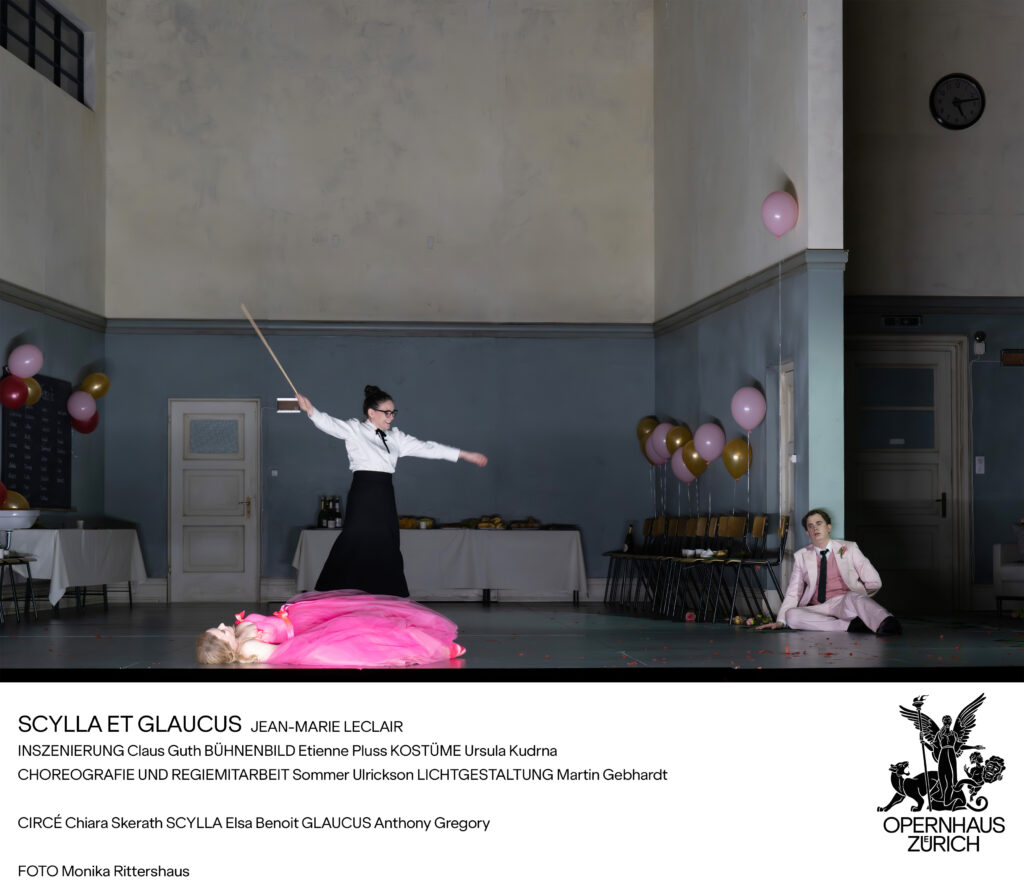
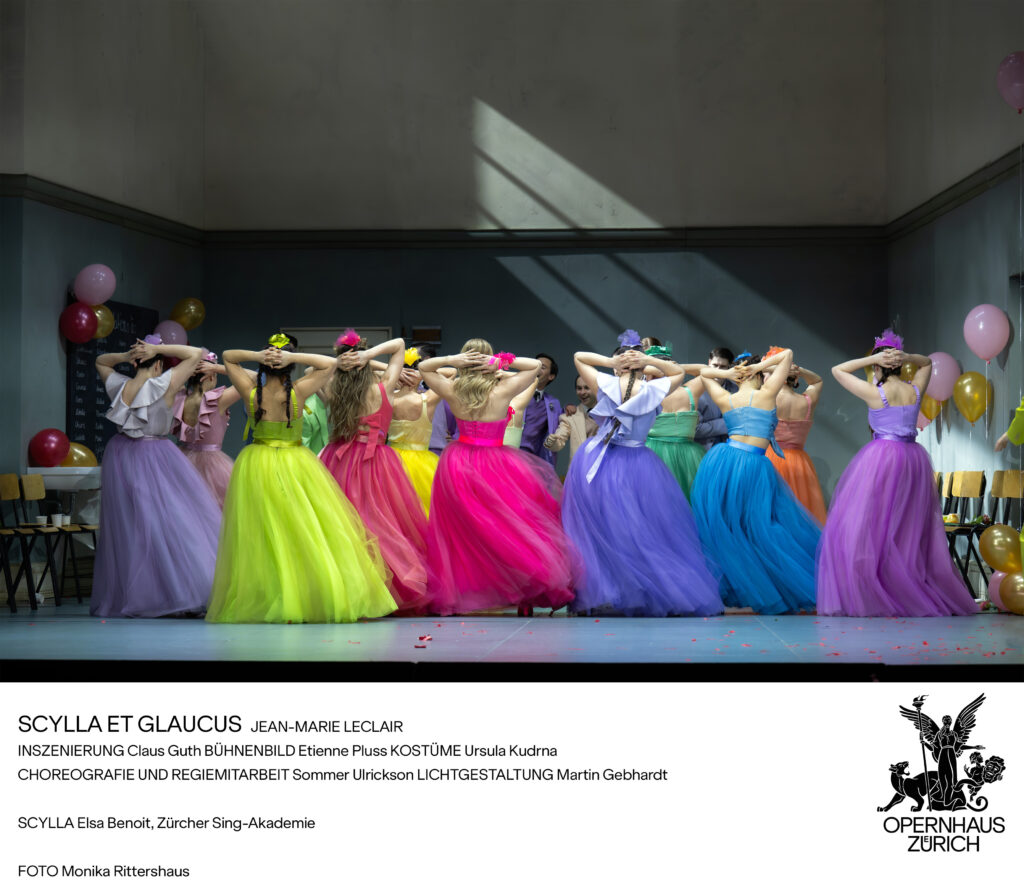
Ursula Kudrna’s costumes displayed great artistry and a keen aesthetic sense. The school uniforms evoked those of contemporary English boarding schools. Circé, like the other female teachers, wore a governess’s outfit reminiscent of Miss Rottenmeier, in the style of 19th-century governesses and educators. In the school ball scene, ballgowns in 1950s style predominated: feminine, elegant, fitted dresses with full skirts in pastel shades.
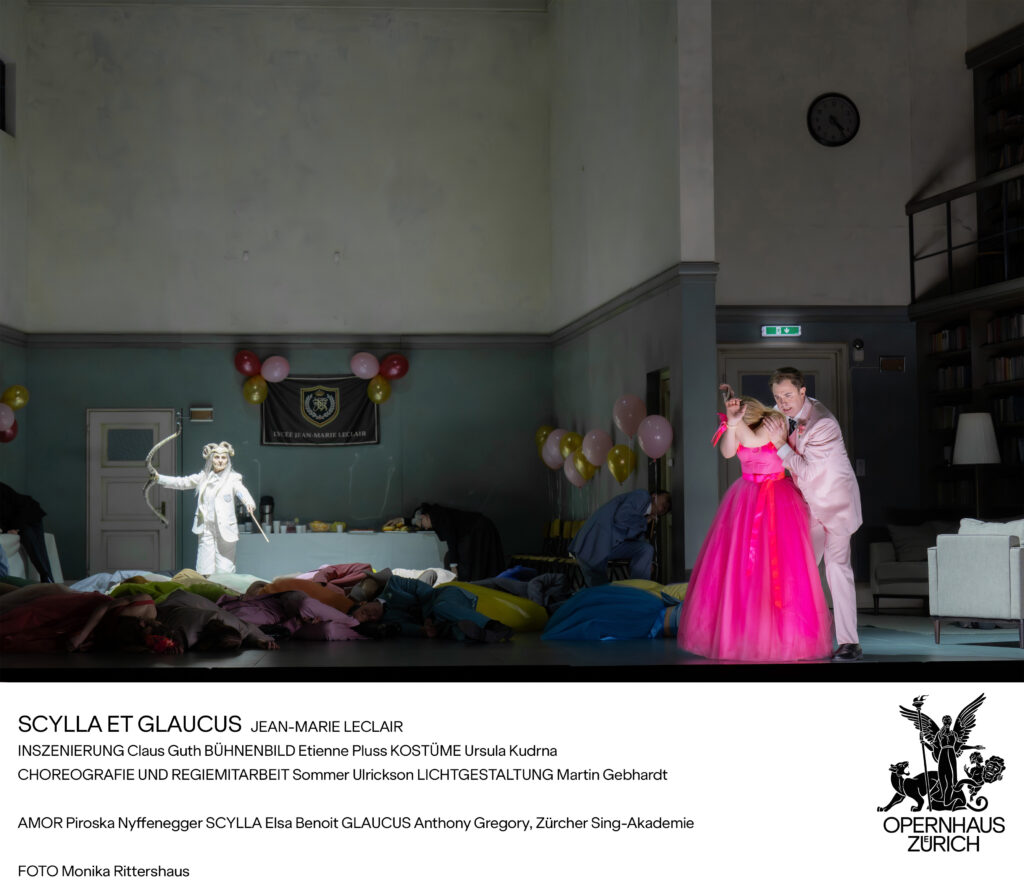
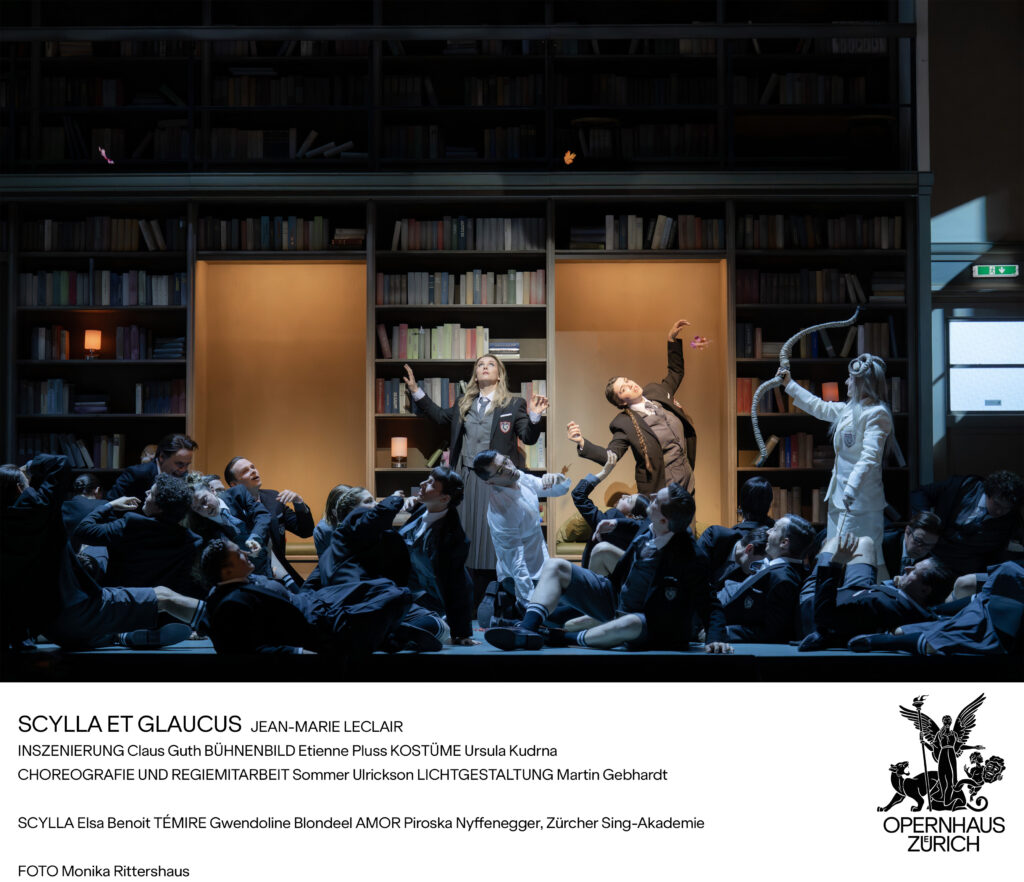
Amor was portrayed as a worldly-wise lady (Piroska Nyffenegger), with bow and ram’s horns, dressed in a white school uniform. Hécate appeared with outstretched arms, eerily looking down from the library’s balustrade, wearing the same governess’s costume as Circé. In both appearance and bass voice, she recalled Mamma Agatha from “Viva la mamma” – that famous operatic figure traditionally sung by a man, lending Hécate a special theatrical and humorous touch.
Increasingly disconcerting
However, we must admit, that the mixture of costumes from different eras, and especially the portrayal of Amor and Hécate – given the otherwise consistent realism – became increasingly disconcerting. These stylistic incongruities made it harder for us to immerse ourselves in the story being told.
Given the impressive stage and costume design, we would have wished that Claus Guth had pursued the visual language dictated by realism more consistently in his direction. The production often felt incoherent in its character direction and visual style: while the set and many costumes followed a consistent realism and clear aesthetic, certain appearances – such as those of Amor and Hécate – with their esoteric gestures, special effects, and stylistic ruptures, stood in stark contrast to the otherwise realistic concept.
Potpourri of concepts
The result was a potpourri of concepts, which made it difficult to empathize with the characters or follow the emotional thread. The program booklet describes the intention to present the boarding school as a place of discipline, but also of upheaval and the awakening of youthful emotions; this, however, was not realized in the direction. We were unsettled by the, at times, unnatural character direction, the occasionally ill-judged integration of the chorus, the choice of ballgown colors in the ball scene, as well as the choreographic interludes by the dancers (Emma Bas González, Pietro Cono Genova, Sara Peña, and Maren Kathrin Sauer; choreography & assistant: Sommer Ulrickson), which neither matched the music nor convinced dramatically, and sometimes seemed almost incidental in the background. The sudden suggestion of magical powers – through fire effects or other special effects – the exaggeratedly hysterical outbursts of Scylla, Hécate’s appearance as Mamma Agatha, and the random use of props such as balloons or a colorful ribbon all left us searching for a narrative thread that might have drawn the audience emotionally into the story.
In the end, the production fell short of the possibilities opened up by the set and the musical realization – a sadly not uncommon phenomenon when directors lose sight of the coherence of the plot and thus the audience’s emotional engagement.
Misleading labeling
Not least, the sung text often bore little relation to the stage action. It was noticeable that the German surtitles were often greatly simplified or even altered in meaning – presumably to reduce the discrepancy between text and staging. Those reading the English surtitles, however, could recognize the original French text, making the difference even more apparent. It would be highly desirable, in future, if the Zurich Opera House offered the option of displaying the opera’s original text as well.
All this ultimately raises the question of the point of forcibly updating operas that are not suited to such treatment, especially when their stories are so firmly rooted in another time and world – as is the case here, with its origins in Greek mythology. And, if one truly wishes to tell a different story, one should also adapt the libretto accordingly, in order to create dramatic unity. Otherwise, as we experienced here, singers behave on stage in ways at odds with the sung text – which simply appears bizarre.
Nevertheless, none of this detracts from the artistic achievements of the singers.
Chiara Skerath impressed as Circé with dramatic intensity and virtuosic coloratura in her aria “Il me fuit, hélas” – for us, perhaps the musical highlight of the evening. The excellent Zurich Sing-Akademie (chorus preparation: Alice Lapasin Zorzit, Richard Wilberforce) contributed greatly, supporting Skerath’s performance with impressive precision and expressiveness. Together with the already superb orchestra, this created a musically fantastic and deeply moving moment.
Elsa Benoit as Scylla touched us with her lyrical expression, lending the character a special emotional depth. Her finely nuanced voice and sensitive interpretation provided moving moments and offered an effective contrast to Chiara Skerath’s dramatic intensity as Circé.
Anthony Gregory as Glaucus seemed a little reserved at the start of his appearance, his middle register initially somewhat constrained. As the evening progressed however, he gained in character, expressiveness, and presence, so that in his virtuoso aria “Chantez, chantez, Amour” he was able to demonstrate his vocal qualities, his beautiful upper register, and, not least, his impressive command of coloratura.
Gwendoline Blondeel gave a beautifully shaped performance of Témire’s aria “Viens, Amour, quitte Cythère”, interpreting the piece with touching nuance, tonal purity, and fine phrasing. She was supported by the excellent Zurich Sing-Akademie, whose homogeneous sound further enhanced the effect of the aria.
Ekkehard Abele shaped the role of Hécate with his distinctive bass voice and impressive stage presence. Appearing in women’s clothing reminiscent of Mamma Agatha, he provided effective highlights and added an entertaining facet to the stage action. Jehanne Amzal (Dorine), Daniel Brant (Shepherd), and Peter Strömberg (Wood Spirit) rounded off the ensemble convincingly.
Conclusion: Musically and visually (in terms of set and costumes), Scylla et Glaucus at the Zurich Opera House was a genuine experience.
The orchestra “Le Concert d’Astrée” under Emmanuelle Haïm delighted with precision, energy, and stylistic authenticity. The soloists were consistently of a remarkably high standard, while the excellently prepared Zurich Sing-Akademie chorus impressed with homogeneity, expressiveness, and beauty of sound.
Étienne Pluss’s set transported the audience into a fascinating parallel world with impressive realism and attention to detail – even if, for us, there was no discernible connection to Leclair’s Scylla et Glaucus.
The production itself however, suffered from stylistic inconsistencies and uneven character direction, making it difficult to become emotionally involved in the story. In particular, the mixture of realistic and surreal elements, as well as the sometimes-superfluous choreographic dance interludes, often seemed arbitrary and deprived the production of dramatic clarity. In the end, we almost wished for a concert performance instead. Judging by the final applause, however, the audience seemed to have enjoyed the evening. When the production team appeared, a faint, restrained boo from the upper tiers could be heard, but no one else joined in. What remains in the memory is, above all, a musically outstanding experience. A performance with Emmanuelle Haïm and her orchestra “Le Concert d’Astrée” is, in any case, always to be recommended.