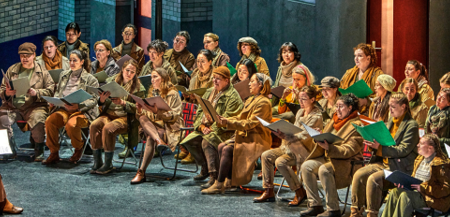
\”Ik moest zo huilen\”
Read More →

\”Ik moest zo huilen\”
Read More →
Written on Skin. Librettist Crimp bedient zich van een spitsvondige truc: hij laat engelachtige figuren het verhaal vertellen en er tegelijk aan deelnemen. Opmerkelijk is ook de ontwikkelingsgang van Agnès, van onderdrukte vrouw naar iemand die haar lot in eigen handen neemt (het begrip \\\\\\\\\\\\\\\”sterke vrouw\\\\\\\\\\\\\\\” komt ons niet uit de pen). Deze transformatie is de kern van deze opera. Haar bevrijding is tegelijk een daad van zelfvernietiging, wat de vrolijkheid niet ten goede komt.
Read More →
Macbeth. This was a wonderful evening at the opera – the sort of performance you want to see more than once. A true treat for lovers of great singing, set within a production that was original and creative in the best sense. What would be called “Regietheater” – director’s theatre – in German-speaking countries seems an unfair label here. The term is often used pejoratively, and it simply does not fit. Respect was always at the forefront.
Read More →
The Opera Circus. Handel is bij het Bachvereniging-orkest, dirigent Hernán Schvartzman, natuurlijk in goede handen. We werden getrakteerd op een ruime hoeveelheid fragmenten uit sinfonia’s en sonates, en zelfs Semele kwam nog even voorbij. De moderne, veelvormige percussie-instrumenten schudden de boel op spectaculaire wijze op. Conclusie: Een visueel bijgewerkte Handel-potpourri, een ontspannen en plezierige avond.
Read More →
Tristan und Isolde. Als de liefde zo heerlijk is, waarom doet ze dan zo pijn? Als de liefde zo pijn doet, waarom willen wij haar dan zo graag in ons leven? Hiermee zou ik graag willen eindigen. Maar dat kan niet. Wij moeten immer doorgaan op de golven van verlangen, verzuchten, smachten, streven.
Read More →
Tristan. “En wat ik van Pierre heb geleerd, is goed luisteren, niet alleen naar die muziek, maar ook naar wat er om je heen gebeurt, de mensen. Signalen opvangen om zo een heel proces in goede banen te kunnen leiden. Op die manier kan iets vorm krijgen en ben je niet bezig met een waarheid brengen, zover die zou bestaan.”
Read More →
Opera. There is no well-drafted story with reasons why a libretto does not need to be respected. One gets no further than nonsensical one-liners. The fallacies with which Johnny Modern tries to justify the Entführung aus dem Serail placed in a brothel have long been known.
Read More →
Opera. There is no well-drafted story with reasons why a libretto does not need to be respected. One gets no further than nonsensical one-liners. The fallacies with which Johnny Modern tries to justify the Entführung aus dem Serail placed in a brothel have long been known.
Read More →
Adelson e Salvini. Adelson e Salvini is one of those opera titles that even many Bellini lovers discover late or not at all; understandable, because it is an opera that balances between “promising” and “unfinished.”
Read More →
Adelson e Salvini. Adelson e Salvini is een van die operatitels die zelfs veel Bellini-liefhebbers pas laat of helemaal niet ontdekken; begrijpelijk want het is een opera die balanceert tussen “veelbelovend” en “onaf”.
Read More →
The Secret Opera Lover. He nods approvingly when the terms “deconstruction,” “reinterpretation” and “actualization” are mentioned. And when wine is drunk in the foyer afterwards, he always has a phrase ready that anchors him safely in the troupe: “This is 2025, not 1850.” But deep inside – beneath the layer of socially desirable modernity – lurks a carefully kept secret. Homesickness. A gentle but insistent longing for something that is considered highly suspect in opera circles of contemporary people: opera that is true to the libretto and the episode.
Read More →
Madama Butterfly in Sydney. Oxenbould’s stylish single-set production is a reliable workhorse with no surprises, pulling all the right strings and ticking all the right boxes. Its balletic, “movement”-heavy approach to blocking frequently smacks of filling the moment for the sake of it, but if its ubiquity in the company’s rotation is anything to go by, such easily repeatable elements can compensate for a dramatic cohesion that often goes by the wayside when time (a.k.a.: money) and box office are of the essence.
Read More →

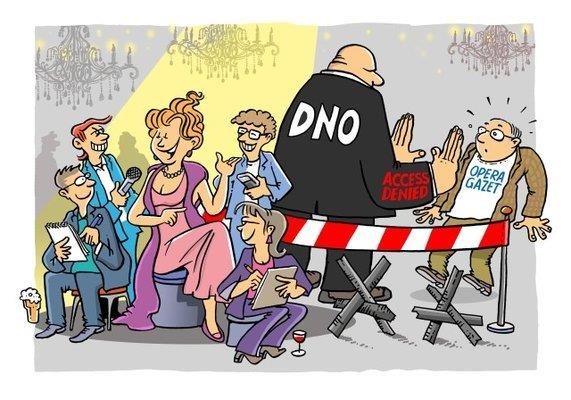
The secret opera connoisseur. Das Syndikat sagt NEIN! ( The Syndicate says NO! )
Read More →

De geheime operakenner. Das Syndikat sagt NEIN!
Read More →

Violetta. Dat ze er ondertussen bloed bij ophoest, is een psychosomatische vooruitwijzing naar de Eerste Wereldoorlog. Haar echte betekenis ligt in haar indrukwekkende vermogen om het repugnante demasqué der onwaarachtigheid op esthetische, quasi-esthetische wijze zo u wilt, te presenteren.
Read More →

Norma. Bellini\\\’s Norma is rather ambiguous in musical terms. On paper, the orchestra often seems sober and \\\’standard\\\’ bel canto, but in an excellent performance, the work can be mesmerising. Norma is entirely dependent on top-quality vocals. Bellini writes long phrases that offer little \\\’foothold\\\’ to singers who do not have exceptional legato. \\\’Casta diva\\\’ unfolds deliberately simply and slowly, but with too broad a vibrato, the aria becomes a series of loose, beautiful notes. This applies equally to the following cabaletta \\\’Ah! bello a me ritorna\\\’: if the tempo is too mechanical, virtuosity turns into routine and the music only sounds accelerating \\\’because that\\\’s how it\\\’s supposed to be\\\’.
Read More →
Norma. Bellini’s Norma is in muzikaal opzicht nogal tweeslachtig. Op papier lijkt het orkest vaak sober en “standaard” belcanto, maar in een voortreffelijke uitvoering kan het werk hypnotiserend werken. Norma is volledig afhankelijk van vocale topkwaliteit. Bellini schrijft lange bogen die nauwelijks “houvast” bieden aan zangers die niet over een uitzonderlijk legato beschikken. “Casta diva” vouwt zich doelbewust eenvoudig en langzaam uit, maar met een te breed vibrato wordt de aria een reeks losse mooie noten. Dat geldt evenzeer voor de erop volgende cabaletta “Ah! bello a me ritorna”: als het tempo te mechanisch is, verandert virtuositeit in routine en klinkt de muziek alleen versnellend “omdat het u eenmaal zo hoort”.
Read More →

Lady Macbeth del distretto di Mcensk. As for the soloists, Sara Jakubiak is a deeply moving Katerina in her vocal and physical performance. Najmiddin Mavlyanov plays a seductive Sergei, indifferent to what he provokes and inexorably sets in motion. Alexander Roslavets imposes a brutal, primitive, and disturbing Boris. Around them, remarkably, each role is played with rare intensity.
Read More →
I Capuleti e i Montecchi. Yaritza Véliz was a revelation for us in the role of Julia. Brilliant, beautiful, and magnificent. This Chilean soprano possesses all the vocal assets and technical skills required for bel canto: purity of tone, excellent breath control and a feel for melodic lines, clarity and precision in the vocalises, a comfortable range and, above all, a flexibility that enables her to convey emotions simply by varying her tone, dynamics or use of voice, with floating, ethereal high notes worthy of the greatest singers.
Read More →

I Capuleti e i Montecchi. Yaritza Véliz was voor ons een openbaring in de rol van Julia. Schitterend, mooi en prachtig. Deze Chileense sopraan beschikt namelijk over alle vocale troeven en technische bagage die nodig zijn voor belcanto: zuiverheid van klankkleur, uitmuntende ademcontrole en gevoel voor melodielijnen, helderheid en precisie in de vocalises, een comfortabel bereik en vooral een flexibiliteit die haar in staat stelt emoties over te brengen door alleen maar te variëren in klankkleur, dynamiek of stemgebruik, met zwevende, etherische hoge tonen die de grootste zangers waardig zijn.
Read More →